In a bustling kitchen, a food processor isn’t just a convenience; it’s a culinary powerhouse. It saves precious time and effort, transforming tedious prep work into a swift, satisfying task. But for a true kitchen workhorse, mere functionality isn’t enough – you need an appliance built to endure. That’s where stainless steel food processors shine. Renowned for their exceptional durability, hygiene, and sleek aesthetics, these machines are engineered to stand the test of time, making them a wise investment for any home chef.
This comprehensive guide will delve into the world of stainless steel food processors, exploring their core components, different types, and what makes them a superior choice for longevity. We’ll equip you with a detailed buying guide, highlight top-rated models, and share essential tips for usage and maintenance, ensuring your chosen food processor remains a cornerstone of your kitchen for years to come.
Food Processors: A Comprehensive Overview
A food processor is a versatile kitchen appliance designed to facilitate a wide range of food preparation tasks. At its heart, it functions as an electric motor-driven device that rapidly chops, slices, shreds, grates, purées, and even kneads dough, significantly reducing manual labor. From preparing salsas and chopping vegetables to making nut butters and mixing batters, a quality food processor streamlines your cooking process.
The core components typically include a robust motor housed in the base, a detachable work bowl that locks onto the base, and a lid with a feed tube for adding ingredients. Inside the bowl, various attachments are used: the multi-purpose S-blade for chopping and pureeing, slicing and shredding discs for uniform cuts, and a dough blade for kneading. Many of these critical components, particularly the blades and sometimes even the bowls or exterior housing, are crafted from stainless steel due to its inherent strength and resistance to corrosion, directly contributing to the appliance’s lifespan.
Classifying Food Processors
Food processors come in various forms, primarily categorized by their capacity and design, to suit diverse culinary needs. Understanding these classifications helps in identifying the most suitable model for your kitchen.
Food processors are commonly classified by their capacity, which dictates the amount of food they can process at once:
- Mini Food Processors (3-5 cups): These compact units are ideal for single servings, small households, or quick tasks like chopping herbs, nuts, or making dressings. While convenient, their motors are typically less powerful, limiting them to lighter tasks.
- Compact/Mid-sized Food Processors (7-9 cups): A popular choice for small to medium-sized families, offering a good balance between capacity and countertop footprint. They can handle most everyday chopping, slicing, and shredding needs.
- Full-sized Food Processors (10-16+ cups): Designed for larger families, entertaining, or batch cooking, these powerful machines can tackle substantial quantities of ingredients, including kneading dense doughs or grinding meat. They often come with a wider array of attachments.
Most modern food processors are designed to be multi-functional, equipped with various blades and discs to perform a multitude of tasks. While some specialized choppers exist, the focus for durable, long-lasting kitchen workhorses tends to be on versatile, countertop models. Countertop food processors offer stability and power, crucial for consistent performance over time, especially when dealing with tough ingredients.
Comparing Food Processor Types
Choosing a food processor often comes down to balancing functionality, capacity, and material quality. When durability is key, the presence of stainless steel components becomes a significant factor.
| Feature | Primarily Stainless Steel (components/housing) | High-Quality Plastic (work bowl/housing) |
|---|---|---|
| Pros | Superior Durability: Highly resistant to wear, corrosion, and impact. | Lighter weight, often more budget-friendly. |
| Cons | Can be heavier and typically higher in initial cost. | Susceptible to scratches, staining, and potential cracking over time. |
| Hygiene | Non-porous surface inhibits bacterial growth, easier to sanitize. | Can absorb odors or stains; minor scratches may harbor bacteria. |
| Aesthetics | Professional, sleek, and timeless appearance. | Varies widely; can look less premium over time with wear. |
| Food Contact | Minimizes food contact with plastic, ensuring better food safety. | Food consistently contacts plastic, which some prefer to avoid. |
| Longevity | Built to last for many years, reducing replacement frequency. | Lifespan can be shorter due to material degradation; parts may fail sooner. |
| Best For | Serious home cooks, heavy daily use, those prioritizing long-term investment. | Occasional use, smaller budgets, those valuing lightweight design. |
> “Stainless steel is more than just a material; it’s a commitment to enduring quality in the kitchen. Its resistance to corrosion and bacterial growth ensures not only longevity but also superior food hygiene.”
The Ultimate Buying Guide: Choosing Your Stainless Steel Food Processor
Investing in a stainless steel food processor is a decision for durability and long-term performance. Here’s what to consider to ensure you pick the perfect, lasting appliance for your culinary adventures.
1. Determine Your Usage Needs and Capacity
Before anything else, consider how you’ll use your food processor. Are you preparing meals for one or two, or a large family gathering?
- Small Households (1-2 people): A 7-cup capacity might suffice for daily tasks.
- Medium Families (3-5 people): Look for 8-12 cup models to handle average meal prep.
- Large Families/Batch Cooking: 12-16 cup capacities are ideal for processing large quantities, kneading bread dough, or entertaining.
The right capacity prevents overloading, which can strain the motor and shorten the appliance’s life.
|
Our Picks for the Best Food Processor in 2026
As an Amazon Associate I earn from qualifying purchases.
|
||
| Num | Product | Action |
|---|---|---|
| 1 | Hamilton Beach Food Processor & Vegetable Chopper for Slicing, Shredding, Mincing, and Puree, 10 Cups + Easy Clean Bowl Scraper, Black and Stainless Steel (70730) |

|
| 2 | Ninja Food Processor, Professional Plus, 1000 Peak Watts, 4 Functions for Chopping, Slicing, Purees & Dough with 9-Cup Processor Bowl, 3 Blades, Food Chute & Pusher, Silver, BN601 |
|
| 3 | Ninja Food Processor, Professional XL, 1200 Peak-Watts, 4-in-1, Chopping, Slicing/Shredding, Purees, Dough, 12-Cup Processor Bowl, 2 Blades & 2 Discs, Feed Chute/Pusher, Black, NF701 |
|
| 4 | BLACK+DECKER 8-Cup Food Processor, Easy Assembly, Stainless Steel S-Blade, Shred, Slice, Chop, Puree, 450W Motor |
|
| 5 | Ninja Kitchen System | 8-Cup Food Processor Bowl & 72 oz. Blender All-in-One | With (2) 16 oz. To-Go Cups | For Smoothies, Ice Crushing, Dough & More | 1500 Watt | Black | BL770 |
|
| 6 | Hamilton Beach Food Processor & Vegetable Chopper for Slicing, Shredding, Mincing, and Puree, 8 Cup, Black |
|
| 7 | Ninja BN600 Professional Food Processor (Renewed) |
|
| 8 | Hamilton Beach Stack & Snap Food Processor and Vegetable Chopper, BPA Free, Stainless Steel Blades, 12 Cup Bowl, 2-Speed 450 Watt Motor, Black (70725A) |
|
| 9 | Cuisinart 5-cup Chop & Shred Food Processor, Silver, FP-5 |
|
| 10 | BLACK+DECKER 3-in-1 Easy Assembly 8-Cup Food Processor, Stainless Steel S-Blade, Easy-Clean, Touchpad Controls Black |
|
2. Motor Power (Wattage)
The motor is the heart of your food processor. A powerful motor translates to greater efficiency and durability, especially when tackling tough ingredients.
- 400-600 Watts: Suitable for lighter tasks like chopping soft vegetables, mixing dressings, or pureeing soups.
- 700-900 Watts: A good range for general use, including slicing, shredding, and light dough work.
- 1000 Watts and Above: Essential for heavy-duty tasks such as kneading dense bread doughs, grinding hard cheeses, or processing nuts and frozen fruits without straining the motor. Higher wattage generally indicates a more robust motor designed for longevity.
3. Emphasize Stainless Steel Components
For a food processor that truly lasts, prioritize stainless steel where it matters most:
- Blades and Discs: Always opt for high-quality stainless steel blades (like Sabatier) and discs. They retain sharpness longer, resist corrosion, and provide precise, consistent results.
- Work Bowl (if available): While less common than plastic, some premium models offer stainless steel work bowls, which are exceptionally durable, non-staining, and easy to clean.
- Motor Housing: A stainless steel exterior not only adds a professional aesthetic but also enhances durability, protecting internal components from knocks and spills. Even if the bowl is plastic, a sturdy stainless steel base signals overall better build quality. When plastic parts are present, ensure they are thick, BPA-free, and feel solid to the touch.
4. Essential Features and Attachments
A truly durable food processor will also offer features that enhance its usability and safety over time:
- Multiple Speeds and Pulse Function: Variable speeds provide control for different textures, while the pulse function offers short bursts of power, ideal for preventing over-processing and reducing motor strain.
- Safety Mechanisms: Look for secure locking systems that prevent operation unless all parts are correctly assembled. An anti-slip base ensures stability during vigorous processing, and overheat protection prevents motor damage.
- Dishwasher-Safe Parts: While stainless steel is easy to hand-wash, dishwasher-safe components simplify cleanup and encourage regular maintenance. Always check manufacturer guidelines.
- Feed Tube Size: A wide feed tube minimizes pre-chopping, making prep quicker and more convenient.
- Storage Solutions: Consider models that offer integrated storage for blades and discs to keep them organized and protected, extending their lifespan and preventing accidental damage.
5. Reputable Brands and Price Point
While stainless steel processors may have a higher initial cost, their longevity often translates to better value over time.
- Brands known for durability: Cuisinart, Magimix, Breville, and KitchenAid are frequently cited for their robust construction and reliable performance. Magimix, in particular, is often highlighted for its exceptional build quality and extended warranties.
- Warranty: A longer warranty period (e.g., 3-5 years or more, especially on the motor) is a strong indicator of a manufacturer’s confidence in their product’s durability.
Price Segments for Food Processors
The price of a food processor often correlates with its build quality, motor power, and the presence of durable materials like stainless steel.
- Budget-Friendly (Under $100): These often feature smaller capacities and mostly plastic construction. While some may have stainless steel blades, expect less powerful motors and potentially shorter lifespans. They are suitable for light, occasional use.
- Mid-Range ($100 – $300): This segment offers a good balance of features, power, and durability. You’ll find models with robust motors (700W-1000W), larger capacities (8-14 cups), and often stainless steel blades, some metallic housing accents, and high-quality, durable plastic work bowls. Many popular, reliable brands fall into this category.
- Premium/High-End (Above $300): These are built for serious cooks and heavy use, often featuring very powerful motors (1000W+), large capacities, extensive stainless steel components (including sometimes work bowls or significant portions of the base), and a wide range of specialized attachments. Brands like Magimix and Breville often occupy this segment, known for their exceptional durability, longevity, and extended warranties. These are often the “buy once, use for a lifetime” options.
Top Stainless Steel Food Processors for Lasting Performance
Based on extensive testing and user feedback, several stainless steel food processors consistently earn high marks for their durability, power, and long-term reliability. Here are some top contenders that incorporate significant stainless steel components and are built to last.
1. Magimix by Robot-Coupe Food Processor (e.g., 14-Cup Model)
Overview: Originating from the French company behind industrial food processors, Magimix is synonymous with unparalleled durability and professional-grade performance. These machines are built like tanks, designed to last for decades.
Pros:
- Exceptional Durability: Boasts a commercial-grade induction motor with a lengthy warranty (often 30 years), ensuring incredible longevity.
- Robust Stainless Steel Blades: Features high-quality Sabatier stainless steel blades that provide precise and consistent results for chopping, slicing, and shredding.
- Quiet Operation: Despite its power, it runs remarkably quietly.
- Comprehensive Attachments: Comes with multiple bowls (mini, midi, main) and a wide array of attachments for versatility, all dishwasher-safe.
Cons:
- High Price Point: This is a significant investment, but its lifespan justifies the cost.
- Heavy: Its sturdy build means it’s heavier and less portable than other models.
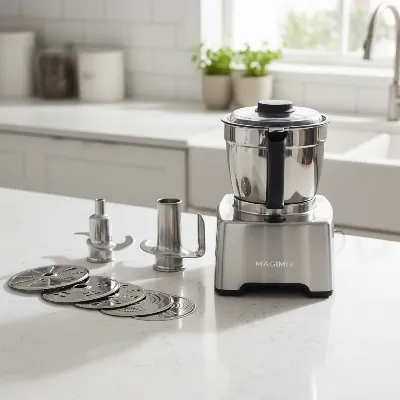 Magimix 14-Cup food processor with various stainless steel blades on a kitchen counter, sleek design, high-angle shot, editorial style
2. Cuisinart Custom 14-Cup Food Processor (Brushed Stainless Steel)
Overview: The Cuisinart 14-Cup food processor is a classic for a reason. It’s a staple in many kitchens, known for its reliable performance and solid construction, often featuring a brushed stainless steel finish on its base.
Pros:
- Proven Reliability: A long-standing favorite lauded for its consistent performance across various tasks, from chopping to kneading dough.
- Powerful Motor: Handles large batches and tough ingredients with ease, providing ample power for most home cooking needs.
- Stainless Steel Blade: Comes with a standard stainless steel chopping blade and various stainless steel discs for slicing and shredding.
- Easy to Use and Clean: Simple two-button operation (On/Off and Pulse) and dishwasher-safe removable parts.
- Brushed Stainless Steel Base: Offers a durable and attractive finish that resists fingerprints and wipes clean easily.
Cons:
- Bowl is Plastic: The work bowl is typically durable plastic, not stainless steel.
- Lacks Advanced Features: Fewer speed settings or specialized programs compared to some high-end models.
3. Breville Sous Chef Food Processor (e.g., 12-Cup or 16-Cup Brushed Stainless Steel)
Overview: Breville’s Sous Chef models are designed for serious home cooks who demand precision, power, and versatility. They feature a robust build, often with a brushed stainless steel base, and intelligent design.
Pros:
- Powerful Motor: High wattage (e.g., 1000W+) makes quick work of all tasks, from pureeing to kneading.
- Adjustable Slicing Disc: A unique feature allowing you to dial in slicing thickness (e.g., 0.3mm to 8.0mm), offering exceptional precision and versatility.
- Large Feed Chute: Accommodates larger ingredients, reducing pre-cutting time.
- Durable Construction: Features a sturdy brushed stainless steel base and high-quality, BPA-free plastic work bowls designed for heavy use.
- Extensive Attachments: Includes multiple stainless steel blades and discs, dough blade, and often a mini bowl for smaller tasks.
Cons:
- Higher Price: Positions itself in the premium segment due to its features and build quality.
- Can Be Bulky: The 16-cup model, in particular, requires significant storage space.
4. GE 12-Cup Food Processor
Overview: The GE 12-Cup food processor is a strong contender offering a great balance of performance and value, often found with a sleek stainless steel finish. It’s a sturdy workhorse that can handle a variety of tasks efficiently.
Pros:
- Affordable Quality: Often available at a more accessible price point while still offering solid performance and durability.
- Stainless Steel Workhorse: Features a sturdy stainless steel base and includes reversible stainless steel blades for slicing and shredding, plus a stainless steel mixing blade.
- Good Capacity: 12-cup capacity is ample for most family needs.
- Multiple Speeds and Pulse: Provides flexibility for different processing requirements.
Cons:
- Less Powerful Motor: At times, it may have a slightly lower wattage compared to top-tier models, which could be noticeable with very dense ingredients.
- Limited Accessory Bundle: Standard sets might come with fewer attachments than higher-end processors, though bundles are often available.
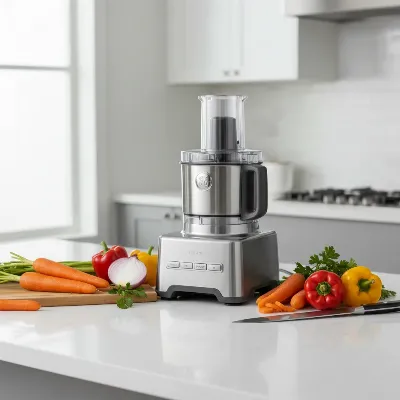 GE 12-Cup food processor with a brushed stainless steel finish on a modern kitchen island, surrounded by fresh vegetables, bright and clean composition
Tips for Using and Maintaining Your Stainless Steel Food Processor
Proper usage and regular maintenance are crucial for extending the life of any appliance, especially a high-quality stainless steel food processor. These practices will ensure it continues to perform optimally for years.
1. Correct Usage Practices
- Avoid Overloading: Resist the temptation to overfill the work bowl. Processing food in smaller batches prevents straining the motor and ensures even results. Most manufacturers recommend filling the bowl no more than three-quarters full.
- Use the Pulse Setting: The pulse function is your best friend. It provides short bursts of power, giving you greater control over consistency and preventing ingredients from becoming over-processed or turning into liquid when you only need a chop. It also helps the motor work efficiently without continuous strain.
- Cut Ingredients to Size: While food processors are powerful, cutting larger ingredients into smaller, manageable pieces before adding them to the feed tube (especially for slicing and shredding discs) can improve efficiency and reduce stress on the blades and motor.
- Allow Cooling: For heavy-duty tasks, if the motor feels warm, give it a short break to cool down. This prevents overheating and protects the motor.
2. Cleaning and Preserving Your Stainless Steel
Stainless steel is prized for its hygiene and ease of cleaning, but proper care is essential to maintain its pristine appearance and corrosion resistance.
- Immediate Cleaning: Clean your food processor immediately after each use. Food residues can dry and become harder to remove, potentially leading to stains or odors, especially on plastic components.
- Disassemble Thoroughly: Always disassemble all removable parts (lid, work bowl, blades, discs) before cleaning. This ensures that no food particles are left trapped in crevices, which can lead to bacterial growth or an overworked motor.
- Use Mild Detergents: Wash parts that come into contact with food with warm, soapy water and a soft cloth or sponge. For stainless steel surfaces, a mild dish soap is usually sufficient. Rinse thoroughly to remove all soap residue, which can cause streaks or dullness.
- Rinse and Dry Immediately: After washing, rinse all components thoroughly with clean water. For stainless steel parts, it is crucial to dry them immediately with a soft, lint-free cloth. Air drying can leave unsightly water spots, especially in areas with hard water, which can eventually lead to mineral buildup or even corrosion over time if neglected.
- Wipe Down the Exterior: Use a damp cloth to wipe down the motor base and any external stainless steel housing. Avoid abrasive cleaners or scouring pads, as these can scratch the beautiful stainless steel finish. Wiping in the direction of the grain on brushed stainless steel can help prevent streaks.
- Dishwasher Safe Parts: Many food processor parts are dishwasher safe, which simplifies cleaning. However, always check your appliance’s manual, as some lids or specialized plastic components may be hand-wash only to prevent warping or damage.
3. General Maintenance and Troubleshooting
- Inspect Blades Regularly: Over time, even stainless steel blades can become dull or sustain minor damage. Regularly inspect them for sharpness and any nicks. Dull blades force the motor to work harder, reducing efficiency and lifespan. Some blades can be professionally sharpened, or replacements can be purchased.
- Check Air Vents: The motor base usually has air vents to prevent overheating. Periodically check these vents for any food buildup or debris that could restrict airflow. Use a soft brush or cloth to gently clear them.
- Lubricate Seals: If your food processor has a seal where the motor shaft joins the blade assembly, it may require occasional lubrication (with food-grade grease, vegetable oil, or mineral oil) as per the manufacturer’s instructions. This helps maintain a tight seal and smooth operation.
- Handle with Care: Avoid using sharp objects to operate buttons or force parts into place. Ensure all parts are aligned correctly before turning on the machine to prevent damage to the locking mechanisms or motor.
- Address Spills Promptly: If liquids spill near the motor housing or base, wipe them up immediately to prevent fluid from seeping into the motor and causing electrical issues. Never submerge the motor base in water.
By adhering to these usage and maintenance tips, your stainless steel food processor will not only maintain its aesthetic appeal but also deliver reliable, efficient performance for countless culinary creations.
Conclusion
A food processor is an indispensable tool for any modern kitchen, and choosing a model with significant stainless steel components elevates it from a mere appliance to a lasting culinary investment. The inherent durability, superior hygiene, and timeless aesthetic of stainless steel ensure that your food processor can withstand the rigors of daily use, resisting corrosion and wear for years to come.
By prioritizing features like a powerful motor, ample capacity, and robust stainless steel blades and housing, alongside diligent maintenance, you’re not just buying a kitchen gadget—you’re securing a reliable partner for countless meals and culinary adventures. So, invest wisely, care for it well, and enjoy the unparalleled efficiency and longevity that a quality stainless steel food processor brings to your home. Which stainless steel food processor will become the new workhorse in your kitchen?
Frequently Asked Questions
How long do stainless steel food processors typically last compared to plastic ones?
Stainless steel food processors, particularly those with durable stainless steel motor housings and high-quality blades, are generally designed for significantly longer lifespans, often lasting 10-20 years or more with proper care. Plastic models, while more affordable, may show signs of wear, staining, or cracking after 3-7 years of regular use. The superior resistance of stainless steel to corrosion, impact, and heat greatly contributes to this extended durability.
Can stainless steel food processor bowls be put in the dishwasher?
Yes, most stainless steel food processor bowls, along with stainless steel blades and discs, are dishwasher safe. Stainless steel’s resistance to rust and high temperatures makes it suitable for dishwasher cleaning. However, it’s always best to consult your specific model’s user manual to confirm and to avoid harsh, abrasive detergents that could potentially dull the finish over time. Prompt drying after washing, even in a dishwasher, can help prevent water spots.
What grade of stainless steel is best for food processor components?
For Food Processors, 304 (or 18/8 and 18/10) grade stainless steel is generally considered excellent for food-contacting parts like blades and sometimes bowls. This austenitic stainless steel is known for its high corrosion resistance, durability, and non-reactive properties, making it safe and hygienic for food preparation. Higher grades like 316 may be used in commercial settings for even greater chemical resistance but are less common (and often unnecessary) for home appliances.