Making homemade pizza is a rewarding culinary adventure, and the foundation of any great pizza is its dough. While traditional hand-kneading offers a satisfying tactile experience, modern kitchen appliances like the food processor have revolutionized the process, making it quicker and less labor-intensive. If you’ve ever wondered how to achieve perfect pizza dough without the extensive workout, your food processor is the answer. This guide will walk you through everything you need to know about preparing delicious, pliable pizza dough right in your own kitchen, saving you time and effort while delivering professional-quality results.
Food Processor: Your Secret Weapon for Perfect Pizza Dough
Overview of the Food Processor in Dough Making
|
Our Picks for the Best Food Processor in 2026
As an Amazon Associate I earn from qualifying purchases.
|
||
| Num | Product | Action |
|---|---|---|
| 1 | BLACK+DECKER 8-Cup Food Processor, Easy Assembly, Stainless Steel S-Blade, Shred, Slice, Chop, Puree, 450W Motor |

|
| 2 | Ninja BN600 Professional Food Processor (Renewed) |
|
| 3 | Hamilton Beach Food Processor & Vegetable Chopper for Slicing, Shredding, Mincing, and Puree, 10 Cups + Easy Clean Bowl Scraper, Black and Stainless Steel (70730) |
|
| 4 | Ninja Kitchen System | 8-Cup Food Processor Bowl & 72 oz. Blender All-in-One | With (2) 16 oz. To-Go Cups | For Smoothies, Ice Crushing, Dough & More | 1500 Watt | Black | BL770 |
|
| 5 | BLACK+DECKER 3-in-1 Easy Assembly 8-Cup Food Processor, Stainless Steel S-Blade, Easy-Clean, Touchpad Controls Black |
|
| 6 | Ninja Food Processor, Professional Plus, 1000 Peak Watts, 4 Functions for Chopping, Slicing, Purees & Dough with 9-Cup Processor Bowl, 3 Blades, Food Chute & Pusher, Silver, BN601 |
|
| 7 | Ninja Food Processor, Professional XL, 1200 Peak-Watts, 4-in-1, Chopping, Slicing/Shredding, Purees, Dough, 12-Cup Processor Bowl, 2 Blades & 2 Discs, Feed Chute/Pusher, Black, NF701 |
|
| 8 | Hamilton Beach Food Processor & Vegetable Chopper for Slicing, Shredding, Mincing, and Puree, 8 Cup, Black |
|
| 9 | Hamilton Beach Stack & Snap Food Processor and Vegetable Chopper, BPA Free, Stainless Steel Blades, 12 Cup Bowl, 2-Speed 450 Watt Motor, Black (70725A) |
|
| 10 | Cuisinart 5-cup Chop & Shred Food Processor, Silver, FP-5 |
|
A food processor is a versatile kitchen appliance designed for a variety of tasks, from chopping and slicing to pureeing and, crucially, kneading dough. While often associated with more delicate tasks, its powerful motor and specialized blades make it an efficient tool for developing gluten in dough. For pizza dough, using a food processor significantly cuts down on preparation time compared to hand-kneading, often yielding a ready-to-rise dough in mere minutes. The key lies in understanding its mechanics and using the correct technique to avoid overworking the dough.
Key Components and Their Functions for Dough Kneading
Understanding the parts of your food processor is essential for optimal dough-making:
- Work Bowl: This is where all your ingredients are combined and processed. Ensure it’s adequately sized for the amount of dough you plan to make, as yeast dough expands during processing.
- Lid with Feed Tube: The lid seals the work bowl and often includes a feed tube, allowing you to add liquids and smaller ingredients while the machine is running. This is particularly useful for gradually incorporating wet ingredients into dry.
- Blades:
- Metal Multi-Purpose Blade: This sharp S-shaped blade is standard in most food processors and can be used for kneading dough. However, it generates more heat, requiring shorter processing times to prevent overworking the dough and killing the yeast.
- Plastic Dough Blade: Many food processors, especially larger models, come with a plastic dough blade specifically designed for kneading. This blade is gentler, creating less heat and allowing for slightly longer processing times, which can be more forgiving for beginners.
Types of Food Processors for Dough Kneading
Food processors vary in size and power, influencing their suitability for kneading dough:
- Compact Food Processors (Small Capacity): These are generally not recommended for kneading yeast dough due to their smaller motor size and bowl capacity. They may struggle with the density of dough and heat up too quickly.
- Mid-Size Food Processors (7-11 cup capacity): These are often suitable for single batches of pizza dough. They offer a good balance of power and capacity for most home cooks.
- Full-Size Food Processors (12+ cup capacity): Ideal for kneading dough, especially if you’re making larger batches or double recipes. Their robust motors and spacious bowls handle the task with ease and efficiency.
Choosing the Right Food Processor for Your Pizza Dough Needs
When selecting a food processor for kneading pizza dough, consider these factors:
- Motor Power: A more powerful motor (typically 600 watts or higher for full-size models) will handle dense doughs more effectively without straining.
- Bowl Capacity: For standard pizza dough recipes, a 7-cup capacity is often the minimum. If you frequently make double batches, opt for a 12-cup or larger model.
- Dough Blade: While not strictly necessary (a metal blade can work), a dedicated plastic dough blade is a beneficial feature for dough-making, offering a gentler process.
- Stability: A heavy, stable base prevents the machine from “walking” on the countertop during the vigorous kneading process.
Step-by-Step Guide: Kneading Pizza Dough in Your Food Processor
Preparing Your Ingredients and Equipment
Before you begin, ensure all your ingredients are measured accurately and at the correct temperature. Warm water (around 105-115°F or 40-46°C) is crucial for activating yeast.
Ingredients Checklist:
- All-purpose or bread flour
- Active dry yeast
- Warm water
- Salt
- Olive oil (optional, for flavor and elasticity)
Equipment Checklist:
- Food processor with appropriate blade (metal or plastic dough blade)
- Measuring cups and spoons
- Small bowl for proofing yeast
- Instant-read thermometer (for water temperature)
- Lightly floured work surface
- Oiled bowl for rising
The Kneading Process: From Dry to Dough Ball
- Combine Dry Ingredients: Add flour and salt to the food processor work bowl. Pulse 3-4 times to thoroughly mix them.
- Activate Yeast: In a separate small bowl or measuring cup, combine warm water with yeast (and a pinch of sugar, if using, to aid activation). Let it sit for 5-10 minutes until foamy, indicating the yeast is active. Add olive oil to this mixture if your recipe calls for it at this stage.
- Add Wet Ingredients Gradually: With the food processor running on low or continuously, slowly pour the yeast mixture through the feed tube into the dry ingredients. The mixture will stream into the flour.
- Forming the Dough Ball: As the liquid is incorporated, the dough will start to come together. Continue processing until a rough ball forms and pulls away cleanly from the sides of the work bowl. This usually takes between 20 to 60 seconds, depending on the blade and recipe.
- If using a metal blade: Process for approximately 12-15 seconds per interval.
- If using a plastic dough blade: Process for approximately 20 seconds per interval.
- Check Dough Consistency: Stop the machine. The dough should be soft, slightly elastic, and not overly sticky. If it’s too sticky, add a tablespoon of flour at a time and process for a few more seconds until it reaches the desired consistency. If it’s too dry, add a teaspoon of warm water and process briefly.
- Quick Hand Knead (Optional but Recommended): Turn the dough out onto a lightly floured surface. Knead by hand for an additional 30 seconds to 2 minutes. This brief hand-kneading helps to further develop gluten and create a smoother texture. The dough should feel smooth and elastic, bouncing back when gently poked.
“Using a food processor for pizza dough is a game-changer for home bakers. It provides excellent gluten development in a fraction of the time, leading to wonderfully chewy crusts.” – Chef Elena Rossi, Culinary Institute Instructor
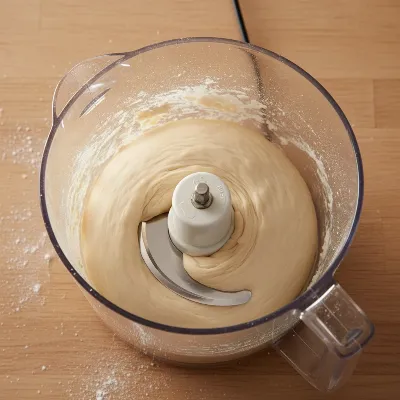 A food processor with pizza dough forming a ball inside, showcasing the kneading process.
Troubleshooting Common Issues
- Dough is too sticky: Add flour, one tablespoon at a time, and pulse briefly until the dough comes together.
- Dough is too dry/crumbly: Add warm water, one teaspoon at a time, and pulse until it just combines.
- Dough not forming a ball: Ensure all liquid has been incorporated. Continue processing for a few more seconds. If still not forming, check the recipe’s flour-to-liquid ratio.
- Overheating the dough: If the dough feels noticeably warm to the touch, you might be overworking it, especially with a metal blade. Keep processing times short. Overheated dough can kill the yeast, affecting the rise.
Essential Tips for Perfect Food Processor Pizza Dough
Optimizing Ingredient Ratios
The ratio of flour to water is critical for pizza dough. Too much flour makes it tough; too little makes it too sticky. Most recipes call for a hydration level (water weight relative to flour weight) between 60-70%. Weighing your ingredients, especially flour, is more accurate than using volume measurements.
Temperature Control for Yeast Activation
Yeast thrives in warm environments. Water that is too hot will kill the yeast, while water that is too cold will hinder its activation, leading to a poor rise. Aim for water between 105-115°F (40-46°C).
Avoiding Overworking the Dough
The biggest risk with a food processor is overworking the dough, which can lead to a tough crust. The short processing times are key. Stop as soon as the dough forms a ball and begins to clean the sides of the bowl. A brief additional hand-knead is often sufficient to refine the texture.
Rest and Rise: The Crucial Steps
After kneading, the dough needs to rest and rise.
- First Rise (Bulk Fermentation): Lightly oil a large bowl, place the dough in it, turning to coat, and cover with plastic wrap or a damp cloth. Let it rise in a warm, draft-free place until doubled in size, typically 1-2 hours. This develops flavor and texture.
- Shaping and Second Rise (Optional): Gently punch down the risen dough, divide it if making multiple pizzas, and form it into balls. You can let these rest for 15-30 minutes before shaping your pizza, allowing the gluten to relax. For a chewier crust, a second short rise after shaping can be beneficial.
Storing Pizza Dough
- Refrigeration: After the first rise, you can refrigerate the dough for 1-3 days. This slow fermentation enhances flavor. Let it come to room temperature for about 30-60 minutes before shaping.
- Freezing: For longer storage, freeze dough balls individually after the first rise. Wrap tightly in plastic wrap and then in foil. Thaw in the refrigerator overnight, then bring to room temperature before use.
Advanced Food Processor Pizza Dough Techniques
Incorporating Flavor Enhancers
Beyond basic ingredients, you can elevate your pizza dough with various flavor enhancers:
- Herbs and Spices: Add dried oregano, basil, garlic powder, or onion powder to the dry ingredients for an aromatic crust.
- Cheese: Finely grated Parmesan or Pecorino Romano can be mixed in with the flour for a savory boost.
- Whole Wheat Flour: Substitute a portion (up to 25-30%) of all-purpose flour with whole wheat flour for a nuttier flavor and added fiber. Adjust water slightly as whole wheat absorbs more liquid.
- Sourdough Starter: While more complex, an active sourdough starter can replace commercial yeast for a tangy, complex crust. Adjust hydration based on your starter’s consistency.
Gluten Development and Texture
The goal of kneading is to develop gluten, the protein network that gives dough its elasticity and chewiness. In a food processor, this happens rapidly. You’ll observe the dough transitioning from shaggy to smooth and elastic. The “windowpane test” – where a small piece of dough can be stretched thinly enough to see light through it without tearing – indicates good gluten development, though this is less crucial for pizza dough than for some breads.
Adapting Recipes for Your Food Processor
Most pizza dough recipes designed for hand-kneading or stand mixers can be adapted for a food processor. The main adjustment is the kneading time. Always start with shorter processing times and check the dough frequently. Reduce the amount of oil if a recipe calls for a large quantity for elasticity, as the food processor develops gluten efficiently.
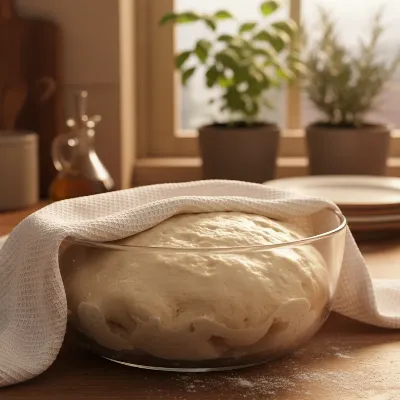 Fluffy pizza dough rising in an oiled bowl, covered with a kitchen towel, in a warm kitchen.
Understanding Different Food Processor Settings
Pulse vs. Continuous Processing
- Pulse Function: Use pulsing at the beginning to combine dry ingredients or to gradually incorporate wet ingredients. It gives you precise control and helps prevent overmixing.
- Continuous Run: Once the dough starts to come together, switch to continuous run for the main kneading phase. This allows the blades to work efficiently in developing gluten until a ball forms.
Speed Settings
Most food processors have low and high-speed settings. For kneading dough, a medium to high speed is typically used once the initial mixing is done. However, for some machines, a lower speed may be sufficient and generate less heat. Refer to your food processor’s manual for specific recommendations.
Safety Precautions
Always ensure the food processor lid is securely locked before operating. Never reach into the work bowl while the blades are in motion. Unplug the unit before removing the lid or dough.
Table: Comparison of Kneading Methods for Pizza Dough
| Feature | Hand Kneading | Stand Mixer | Food Processor |
|---|---|---|---|
| Time Required | 10-15 minutes | 5-8 minutes | 1-2 minutes (plus brief hand-knead) |
| Effort | High | Low | Low |
| Skill Level | Moderate (requires practice) | Easy | Easy |
| Texture | Excellent, traditional | Excellent, consistent | Excellent, quick gluten development |
| Equipment | Hands, clean surface | Stand mixer with dough hook | Food processor with S-blade/dough blade |
| Heat Generated | Minimal | Moderate | Moderate to High (with metal blade) |
| Capacity | Limited by arm strength | Varies by mixer size | Varies by processor bowl size |
| Cleanup | Relatively easy | Bowl, hook, often messier | Bowl, blade, lid, quick |
Food Processor Brands and Models for Dough Making
While most robust food processors can handle dough, some brands are particularly well-regarded for this task:
- Cuisinart: Often considered the pioneer in home food processors, Cuisinart models (especially the 11-cup and 14-cup models) are workhorses for dough.
- KitchenAid: Known for their stand mixers, KitchenAid also produces powerful food processors that come with dedicated dough blades.
- Breville: Breville food processors are praised for their strong motors and sturdy construction, making them excellent for heavy-duty tasks like dough.
When choosing a model, always check reviews specifically mentioning dough performance if it’s a primary use case for you.
Conclusion
Using your food processor to knead pizza dough is an incredible time-saver and a fantastic way to enjoy fresh, homemade pizza with minimal effort. By understanding the correct techniques, choosing the right blade, and paying attention to ingredient ratios and processing times, you can consistently achieve a perfectly kneaded dough that forms the base of a truly delicious pizza. Embrace this DIY method and transform your kitchen into an artisan pizzeria, enjoying the crisp crust and chewy texture that only homemade dough can provide. What culinary creations will you bring to life next with your newfound dough-making efficiency?
Frequently Asked Questions
Can I use a mini food processor to knead pizza dough?
Mini food processors are generally not powerful enough and have too small a capacity to effectively knead pizza dough. They are better suited for chopping small quantities of ingredients.
How long should pizza dough rise after being kneaded in a food processor?
After kneading in a food processor, pizza dough typically needs to rise for 1 to 2 hours in a warm, draft-free place, or until it has doubled in size. The exact time depends on the ambient temperature and yeast activity.
Do I need a special blade to make dough in a food processor?
While some food processors come with a specific plastic dough blade, the standard metal multi-purpose S-blade can also be used. If using the metal blade, be mindful of shorter processing times to avoid overheating the dough.
What if my pizza dough is too tough after using the food processor?
If your pizza dough is tough, it’s likely been overworked. This means the gluten developed too much or the yeast was killed by excessive heat. Next time, reduce processing time and use cooler water, or consider a brief hand-kneading phase.
Can I make gluten-free pizza dough in a food processor?
Yes, you can make gluten-free pizza dough in a Food Processor. Gluten-free doughs don’t develop gluten in the same way, so the processing is more about combining ingredients evenly and creating a smooth mixture rather than extensive kneading for elasticity.