When a food processor won’t turn on, the most common causes are improper assembly, power supply issues, or the unit’s safety interlocks not being engaged. Approximately 80% of non-starting food processor problems can be resolved by ensuring the work bowl and lid are correctly locked into place, checking the power cord and outlet, or allowing the motor to cool down if it has overheated. Addressing these common culprits can quickly get your appliance operational again.
Understanding Your Food Processor
Food processors are versatile kitchen workhorses, capable of everything from chopping and slicing to shredding and pureeing. They operate on a simple principle: a motor powers various attachments like blades and discs to process food quickly. Modern food processors are designed with several interlocking safety mechanisms to prevent accidents, ensuring the machine only operates when all components are correctly assembled.
The core components typically include a robust motor housed in the base, a work bowl, a lid with a feed tube, and various blades or discs. Each part plays a crucial role, and a malfunction or improper setup of any single component can prevent the entire unit from powering on. Understanding these basic functions is the first step in effective troubleshooting. For expert food processor reviews on this site.
Why Won’t Your Food Processor Turn On? Common Causes
When your food processor refuses to start, it’s usually due to a few common issues, ranging from simple oversight to more complex internal failures. Identifying the root cause is essential for a fast fix.
Power Supply Problems
The most straightforward reason your appliance might not turn on is a lack of power. This can stem from a few areas:
- Unplugged or Loose Cord: In the hustle of the kitchen, the power cord can easily become dislodged or not fully inserted into the outlet.
- Faulty Electrical Outlet: The outlet itself might not be providing power, especially if it’s connected to a GFCI that has tripped or if the circuit breaker for that area has flipped.
- Damaged Power Cord or Plug: Visible damage like cuts, bends, or burnt marks on the cord or plug can interrupt the electrical flow.
- Tripped Circuit Breaker: An overloaded circuit can cause a breaker to trip, cutting power to multiple outlets or the entire kitchen.
Improper Assembly and Safety Interlocks
Food processors are equipped with safety mechanisms that prevent the motor from engaging unless all parts are correctly aligned and locked. These interlocks are often located on the work bowl, lid, and sometimes the handle or feed tube.
- Work Bowl Not Seated Properly: The bowl might not be twisted and locked securely onto the motor base.
- Lid Misalignment: The lid must be correctly placed and locked onto the work bowl, often engaging a safety tab or switch.
- Feed Tube Issues: Some models require the pusher in the feed tube to be in a specific position to activate the safety switch.
- Overfilling: Exceeding the maximum fill line can sometimes trigger an overload safety, preventing startup.
Overheating and Overload Protection
|
Our Picks for the Best Food Processor in 2026
As an Amazon Associate I earn from qualifying purchases.
|
||
| Num | Product | Action |
|---|---|---|
| 1 | Cuisinart 5-cup Chop & Shred Food Processor, Silver, FP-5 |

|
| 2 | BLACK+DECKER 8-Cup Food Processor, Easy Assembly, Stainless Steel S-Blade, Shred, Slice, Chop, Puree, 450W Motor |
|
| 3 | Ninja Food Processor, Professional XL, 1200 Peak-Watts, 4-in-1, Chopping, Slicing/Shredding, Purees, Dough, 12-Cup Processor Bowl, 2 Blades & 2 Discs, Feed Chute/Pusher, Black, NF701 |
|
| 4 | Hamilton Beach Stack & Snap Food Processor and Vegetable Chopper, BPA Free, Stainless Steel Blades, 12 Cup Bowl, 2-Speed 450 Watt Motor, Black (70725A) |
|
| 5 | BLACK+DECKER 3-in-1 Easy Assembly 8-Cup Food Processor, Stainless Steel S-Blade, Easy-Clean, Touchpad Controls Black |
|
| 6 | Ninja Food Processor, Professional Plus, 1000 Peak Watts, 4 Functions for Chopping, Slicing, Purees & Dough with 9-Cup Processor Bowl, 3 Blades, Food Chute & Pusher, Silver, BN601 |
|
| 7 | Ninja BN600 Professional Food Processor (Renewed) |
|
| 8 | Ninja Kitchen System | 8-Cup Food Processor Bowl & 72 oz. Blender All-in-One | With (2) 16 oz. To-Go Cups | For Smoothies, Ice Crushing, Dough & More | 1500 Watt | Black | BL770 |
|
| 9 | Hamilton Beach Food Processor & Vegetable Chopper for Slicing, Shredding, Mincing, and Puree, 10 Cups + Easy Clean Bowl Scraper, Black and Stainless Steel (70730) |
|
| 10 | Hamilton Beach Food Processor & Vegetable Chopper for Slicing, Shredding, Mincing, and Puree, 8 Cup, Black |
|
Continuous or heavy-duty use can cause the motor to overheat. Many modern food processors have a thermal cutoff switch designed to protect the motor from damage by automatically shutting off the unit.
- Excessive Use: Running the processor for too long or processing very tough ingredients without breaks can lead to overheating.
- Overload: Attempting to process too large a quantity or ingredients that are too dense for the motor’s capacity can trip internal overload protection.
Internal Component Failures
While less common for a quick fix, internal component failures can also be the reason for a non-starting food processor. These often require professional attention but are good to be aware of.
- Faulty Motor: The motor itself could be defective, worn out, or have an electrical issue.
- Damaged Belt or Gears: Some models use belts or gears to transmit power from the motor to the blades. If these are damaged, the motor might run, but the blades won’t turn.
- Defective Control Knob or Switch: The power switch or control knob might be faulty, failing to send the signal to start the motor.
- Blown Fuse: Some appliances have internal fuses that can blow, indicating an electrical surge or malfunction.
Troubleshooting Your Food Processor: A Step-by-Step Guide
Don’t let a silent food processor ruin your cooking plans. Follow these methodical steps to diagnose and often resolve the issue.
1. Safety First: Unplug and Inspect
Before you begin any troubleshooting, always prioritize safety. Unplug your food processor from the electrical outlet. This prevents any accidental startup or electrical shock. Once unplugged, visually inspect the power cord and plug for any signs of damage, such as cuts, frayed wires, or burnt marks. If you notice significant damage, the cord likely needs to be replaced by a qualified technician.
2. Check the Power Supply
Next, let’s confirm the power source is active.
- Test the Outlet: Plug another small appliance, like a lamp or phone charger, into the same outlet your food processor uses. If the other appliance doesn’t work, the issue is with the outlet or your home’s electrical system, not the food processor itself.
- Try a Different Outlet: Plug your food processor into a different, known-working electrical outlet in your kitchen. This helps rule out a faulty specific outlet.
- Reset Circuit Breaker: If multiple appliances in the kitchen are affected, or if you suspect a power surge, check your home’s electrical panel for a tripped circuit breaker. Flip the breaker firmly to the “off” position, then back to “on.”
3. Verify Proper Assembly
This is arguably the most common reason a food processor won’t start, thanks to built-in safety features.
- Secure the Work Bowl: Ensure the work bowl is fully seated and locked onto the motor base. You often need to twist it clockwise until it clicks into place.
- Align the Lid: The lid must be correctly positioned and locked onto the work bowl. Look for alignment arrows or indicators. The safety tab on the lid must properly engage with the interlock switch on the handle or base.
- Check the Pusher/Feed Tube: Some models require the food pusher to be inserted into the feed tube, engaging another safety switch.
- Blade/Accessory Placement: Make sure the blade or disc is correctly placed on the spindle and seated at the bottom of the work bowl. A jammed blade can also prevent operation.
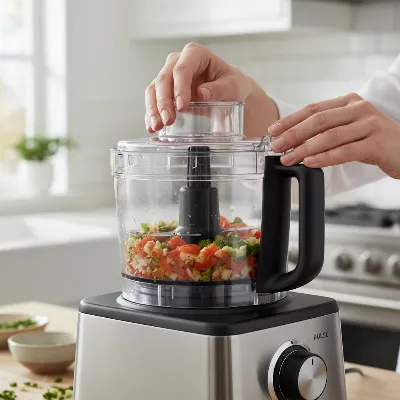 Checking proper assembly of food processor bowl and lid for safety interlock activation
4. Address Overheating or Overload
If your food processor was recently in use and suddenly stopped, or if you were processing dense ingredients, it might have overheated or been overloaded.
- Allow to Cool Down: Unplug the unit and let it rest for 10-30 minutes to allow the motor to cool. The thermal protection switch should automatically reset once the motor temperature drops.
- Remove Excess Food: If you suspect overfilling, remove some of the food from the work bowl to reduce the load on the motor.
- Reset Button: Some food processors have a dedicated reset button, often located on the bottom or back of the base. Check your user manual for its location and instructions.
5. Inspect for Jams or Obstructions
Occasionally, a piece of food or a foreign object can get lodged, preventing the blade from spinning freely or interfering with the motor.
- Clear the Bowl: Remove the lid and blade, then clear out any food particles or debris from the work bowl and around the spindle.
- Check Under the Blade: Ensure nothing is obstructing the blade’s rotation or the connection to the motor shaft.
6. Consider Control Knob or Switch Issues
If you’ve tried all the above and there’s still no power, the control knob or internal switch might be faulty.
- Firm Engagement: Ensure the control knob or buttons are firmly pressed or rotated to the “on” position. Sometimes, a loose or worn switch might not make proper contact.
- Listen and Observe: Does the unit make any noise (like a faint hum) or do any indicator lights come on? This can provide clues about whether power is reaching the unit but not engaging the motor.
7. When to Call a Professional
If you’ve meticulously followed these troubleshooting steps and your food processor still won’t turn on, the issue might be more complex and require professional intervention.
- Motor Failure: If the motor itself is defective or has worn-out components, it will need replacement or repair. Signs include burning smells, unusual noises, or the motor shaft being difficult to turn manually (after unplugging).
- Damaged Internal Wiring or Fuses: These are not user-serviceable and pose an electrical hazard.
- Defective Circuit Board: Modern processors often have electronic control boards that can fail.
“While many food processor issues can be resolved with simple checks, never hesitate to consult a professional for internal electrical or motor problems. Safety should always be your top priority.”
Common Food Processor Issues & Quick Solutions
Here’s a quick reference table to guide you through common “no power” scenarios and their solutions:
| Issue | Cause | Quick Fix | When to Call Professional |
|---|---|---|---|
| No Power At All | Loose plug, faulty outlet, tripped breaker, damaged cord | Check plug, try new outlet, reset breaker, inspect cord | Damaged cord, consistently tripped breaker |
| No Power, But Lights On | Improper assembly, safety interlock not engaged, jammed blade | Reassemble bowl/lid, check blade, clear obstructions | Faulty safety switch, motor issues |
| Stopped Mid-Operation | Overheating, overload protection | Let cool down, reduce load, press reset button | Persistent overheating after cooling |
| Motor Hums, But Blades Don’t Turn | Damaged belt or gears, obstructed blade | Clear obstructions, inspect belt/gears (if accessible) | Broken belt/gears, motor coupling |
| No Response to Controls | Faulty control knob/switch, internal wiring | Ensure firm engagement of controls | Defective control board/switch |
Maintaining Your Food Processor for Longevity
Prevention is always better than cure. Proper care can significantly extend the life of your food processor and prevent common issues.
- Regular Cleaning: Always clean the work bowl, lid, and blades immediately after use. Food residue can dry and interfere with safety interlocks or accumulate around the motor shaft.
- Follow Fill Lines: Never overfill the work bowl beyond the maximum fill line indicated. This prevents strain on the motor and potential overflow.
- Process in Batches: For large quantities or tough ingredients, process in smaller batches to avoid overheating the motor.
- Proper Storage: Store your food processor assembled or with all parts neatly organized. Keep the power cord untangled and free from kinks or sharp bends.
- Read the Manual: Your user manual is a treasure trove of specific troubleshooting tips, assembly instructions, and maintenance advice unique to your model. Refer to it often.
 Food processor maintenance tips for optimal performance and longevity
Conclusion
A food processor that won’t turn on can be a momentary headache, but with a methodical approach, most issues are easily resolved without needing professional help. By systematically checking the power supply, ensuring correct assembly, allowing for cool-down periods, and performing regular maintenance, you can quickly get your appliance back to its full, powerful potential. Remember, when in doubt about internal electrical components or complex motor issues, it’s always best to consult an expert. Keeping your food processor in top condition means many more years of effortless meal prep.
What culinary creations will you bring to life with your fully functional food processor next?
Frequently Asked Questions
Why do food processors have so many safety features?
Food processors have numerous safety features, such as interlocks on the bowl and lid, to prevent accidental operation when components are not properly secured. This design ensures that the blades are not exposed while the motor is running, greatly reducing the risk of injury during use. These features are mandated by safety standards to protect users.
Can a food processor motor be replaced if it’s faulty?
Yes, a food processor motor can often be replaced if it is faulty, though this is typically a job for a qualified appliance repair technician. Attempting to replace the motor yourself can be complex and may void your warranty. It’s usually more cost-effective for high-end models, as replacing the entire unit can be expensive.
Frequently Asked Questions
What are the most common reasons a food processor fails to turn on?
The most common reasons a food processor fails to turn on include improper assembly (work bowl or lid not locked), power supply issues (unplugged cord, faulty outlet, tripped breaker), or the motor overheating due to excessive use. These issues account for approximately 80% of non-starting problems.
How do safety interlocks prevent a food processor from starting?
Safety interlocks prevent a food processor from starting by requiring all components, such as the work bowl and lid, to be correctly aligned and securely locked into place. If any part is misaligned, a safety tab or switch will not engage, cutting power to the motor and preventing operation to ensure user safety.
What should I do if my food processor stopped working mid-operation?
If your food processor stopped working mid-operation, it likely triggered its overheating or overload protection. Unplug the unit and allow it to cool down for 10-30 minutes. Remove any excess food to reduce the load, and check if your model has a reset button, often located on the bottom or back of the base.
Why do food processors have so many safety features?
Food processors have numerous safety features, such as interlocks on the bowl and lid, to prevent accidental operation when components are not properly secured. This design ensures that the blades are not exposed while the motor is running, greatly reducing the risk of injury during use. These features are mandated by safety standards to protect users.
Can a food processor motor be replaced if it's faulty?
Yes, a food processor motor can often be replaced if it is faulty, though this is typically a job for a qualified appliance repair technician. Attempting to replace the motor yourself can be complex and may void your warranty. It's usually more cost-effective for high-end models, as replacing the entire unit can be expensive.
Troubleshoot a Food Processor That Won't Turn On
Follow these 7 methodical steps to diagnose and resolve common issues preventing your food processor from turning on, from power problems to assembly errors.
Always unplug the food processor from the electrical outlet before troubleshooting to prevent shocks. Visually inspect the power cord and plug for any cuts, frayed wires, or burnt marks. If significant damage is present, a qualified technician should replace the cord.
Test the outlet by plugging in another small appliance. If it doesn't work, the issue is with the outlet or circuit breaker. Try plugging your food processor into a different, known-working outlet, and reset any tripped circuit breakers in your home's electrical panel.
Ensure the work bowl is fully seated and locked onto the motor base, typically by twisting it clockwise until it clicks. Confirm the lid is correctly positioned and locked onto the work bowl, engaging its safety tab. Some models also require the food pusher to be inserted into the feed tube.
If the unit was recently in use, unplug it and let it cool for 10-30 minutes to allow the thermal protection switch to reset. Remove any excess food if overfilling is suspected. Check your user manual for a dedicated reset button on the appliance.
Remove the lid and blade, then clear any food particles or debris from the work bowl and around the spindle. Ensure nothing is obstructing the blade's rotation or its connection to the motor shaft, as a jam can prevent the motor from engaging.

This was super helpful for a commercial-grade processor we have in the restaurant kitchen. One of the newer cooks wasn’t locking the lid correctly, which was causing the ‘won’t turn on’ problem. It’s a simple fix, but easy to overlook when you’re in a rush. Glad to have a quick checklist for these common culprits.
My old Cuisinart stopped spinning last week and I was ready to just buy a new one. Luckily, I found this info and realized I hadn’t properly engaged the safety interlocks after cleaning the work bowl. A quick adjustment and it’s back to pureeing soups like a champ! Saved me a ton of money and hassle.
I had an issue where my KitchenAid food processor just wouldn’t turn on. I went through all the steps, checking the power cord and outlet, but it still didn’t work. Turns out the motor had overheated from making too much hummus. It eventually started again after a long cool-down, but it would have been nice if there was a clearer indicator for that.
I thought my food processor was completely broken when it suddenly stopped mid-chop. I followed the advice about checking the assembly and realized the work bowl wasn’t seated perfectly. A little twist and click, and it was back to shredding cheese for taco night. So glad I didn’t have to buy a new one!