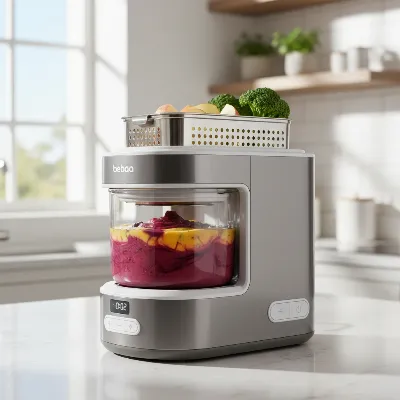
A food processor is a kitchen workhorse, indispensable for everything from finely chopping vegetables to kneading dough. When your trusty food processor bowl suffers a crack, a broken tab, or a chip, it can bring your culinary adventures to a grinding halt. While the immediate thought might be to replace the entire unit, sometimes a simple, well-executed DIY repair can extend its life and save you money. This guide, drawing on over a decade of hands-on experience with these versatile machines, will walk you through understanding common damage, deciding when to repair, and performing safe, effective fixes yourself.
Understanding Food Processor Bowl Damage
Food processor bowls are typically made from durable plastics like polycarbonate or Tritan, designed to withstand the rigors of chopping and blending. However, they aren’t indestructible. Over time, or due to accidents, several types of damage can occur:
- Cracks: These can range from hairline fractures to deep fissures. They often appear near the base, handle, or around the spindle where the blade attaches. Cracks can result from impact, dropping the bowl, or even from the stress of processing tough ingredients over time.
- Chips: Small pieces of plastic might chip off, especially from the rim, handle, or around the feed chute, usually due to impact or abrasive cleaning.
- Broken Handles: The handle is a common point of failure, experiencing stress from lifting and locking the bowl into place.
- Faulty Locking Tabs/Lid Mechanisms: These small plastic tabs ensure the lid and bowl are securely locked onto the motor base, engaging the safety switch. If they break, the food processor won’t operate, as a safety feature. This can happen from improper assembly or excessive force.
Understanding the nature and location of the damage is the first step in deciding whether a DIY repair is feasible or if it’s time for a replacement.
When to Repair vs. Replace
Deciding between repairing and replacing your food processor bowl hinges on the type and severity of the damage, safety concerns, and cost. While DIY fixes can be satisfying and economical, safety should always be your top priority.
For minor, non-structural cracks or small chips that do not compromise the bowl’s stability or the safety interlock, a careful repair with appropriate adhesives might be a viable option. This includes small aesthetic cracks or chips on areas that don’t experience high stress or direct food contact under pressure.
However, major structural damage, deep cracks that run through stress points (like the base or handle), or large missing pieces often warrant replacement. If the bowl wobbles when locked in place, or if the damage affects the safety mechanism that prevents the blades from spinning when the lid is open, replacement is strongly recommended. The high-speed rotation of blades inside a compromised bowl can be extremely dangerous, leading to further breakage and potential injury. Similarly, if the broken part is essential for the blade to seat correctly or for the lid to seal tightly, a repair might not hold up to the torsional forces generated during operation.
When considering cost, weigh the price of specialized food-safe adhesives and your time against the cost of a new replacement bowl. Official replacement bowls can range from approximately $30 for smaller models to well over $100 for larger or specific brand-name units. In some cases, a new bowl might be almost as expensive as a new budget-friendly food processor.
“Many minor issues, like hairline cracks on non-critical parts or superficial chips, can often be addressed with the right food-safe adhesives. However, for any damage that compromises the structural integrity or safety interlock of your food processor, replacement is not just a recommendation, it’s a necessity.” – Admin of ReviewsHype.com, Food Processor Technician
Essential Tools and Materials for DIY Repair
Embarking on a DIY repair requires a few key items to ensure both effectiveness and, crucially, food safety. Using the wrong adhesive can introduce toxic chemicals into your food, even if it seems to hold the plastic together.
The most critical component is a food-safe adhesive. Look for products explicitly labeled as FDA-compliant or certified for direct or indirect food contact.
- Food-Grade Epoxy (Two-Part): This is often your best bet for strong, durable repairs on hard plastics. Two-part epoxies create a robust bond, are typically waterproof, and can be heat-resistant once fully cured. Brands like Permabond offer FDA-approved epoxy adhesives specifically formulated for food contact equipment. Ensure the product states it is safe for plastics like polypropylene (PP), polyethylene (PE), or polyethylene terephthalate (PET), which are common in food processor bowls.
- 100% Food-Grade Silicone Sealant: Ideal for sealing fine cracks or reattaching gaskets where some flexibility is needed. It’s excellent for its temperature resistance (both hot and cold) and ability to form a watertight seal. Crucially, it must be 100% food-grade and free from mold inhibitors or antimicrobials often found in standard bathroom silicones. Look for “NSF 51 Certified” for food equipment applications.
- Plastic Solvent (e.g., Weld-on #4): This is not a glue. Instead, it works by chemically fusing two pieces of the same type of plastic, effectively melting them together to form a single, strong piece. This method is highly effective for repairing broken locking tabs or handles if you have the original broken piece, and you can identify the plastic type. It creates a bond as strong as the original plastic, without adding foreign material.
Other essential tools and supplies include:
- Cleaning Supplies: Isopropyl alcohol (rubbing alcohol), mild dish soap, warm water, and lint-free cloths are necessary for thoroughly cleaning the damaged area.
- Fine-Grit Sandpaper (120-220 grit): Lightly sanding the repair area provides a rough surface for the adhesive to grip onto, improving bond strength.
- Clamps or Masking Tape: To hold broken pieces firmly in place while the adhesive cures.
- Disposable Gloves and Safety Glasses: Always protect your hands and eyes when working with adhesives and solvents.
- Small Mixing Sticks and Mixing Surface: For two-part epoxies.
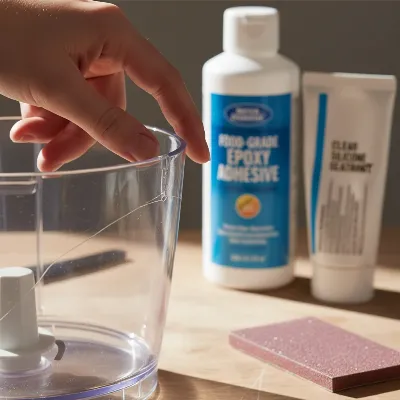 A hand carefully inspecting a hairline crack on a food processor bowl, surrounded by various DIY repair tools and food-safe adhesives.
Step-by-Step DIY Repair Guide for Common Issues
Before attempting any repair, always prioritize safety. Disconnect your food processor from the power outlet.
General Preparation for Any Repair
|
Our Picks for the Best Food Processor in 2026
As an Amazon Associate I earn from qualifying purchases.
|
||
| Num | Product | Action |
|---|---|---|
| 1 | BLACK+DECKER 8-Cup Food Processor, Easy Assembly, Stainless Steel S-Blade, Shred, Slice, Chop, Puree, 450W Motor |

|
| 2 | Ninja BN600 Professional Food Processor (Renewed) |
|
| 3 | Ninja Kitchen System | 8-Cup Food Processor Bowl & 72 oz. Blender All-in-One | With (2) 16 oz. To-Go Cups | For Smoothies, Ice Crushing, Dough & More | 1500 Watt | Black | BL770 |
|
| 4 | Hamilton Beach Food Processor & Vegetable Chopper for Slicing, Shredding, Mincing, and Puree, 10 Cups + Easy Clean Bowl Scraper, Black and Stainless Steel (70730) |
|
| 5 | Hamilton Beach Food Processor & Vegetable Chopper for Slicing, Shredding, Mincing, and Puree, 8 Cup, Black |
|
| 6 | Ninja Food Processor, Professional XL, 1200 Peak-Watts, 4-in-1, Chopping, Slicing/Shredding, Purees, Dough, 12-Cup Processor Bowl, 2 Blades & 2 Discs, Feed Chute/Pusher, Black, NF701 |
|
| 7 | Hamilton Beach Stack & Snap Food Processor and Vegetable Chopper, BPA Free, Stainless Steel Blades, 12 Cup Bowl, 2-Speed 450 Watt Motor, Black (70725A) |
|
| 8 | BLACK+DECKER 3-in-1 Easy Assembly 8-Cup Food Processor, Stainless Steel S-Blade, Easy-Clean, Touchpad Controls Black |
|
| 9 | Cuisinart 5-cup Chop & Shred Food Processor, Silver, FP-5 |
|
| 10 | Ninja Food Processor, Professional Plus, 1000 Peak Watts, 4 Functions for Chopping, Slicing, Purees & Dough with 9-Cup Processor Bowl, 3 Blades, Food Chute & Pusher, Silver, BN601 |
|
- Unplug and Disassemble: Ensure the food processor is unplugged. Remove the bowl and any attachments.
- Clean Thoroughly: Wash the bowl with warm, soapy water to remove all food residues. Rinse thoroughly and then clean the damaged area with isopropyl alcohol to remove any grease or oils. Allow it to air dry completely.
- Assess Damage: Re-examine the crack or break. If it’s larger or more extensive than initially thought, reconsider if DIY repair is truly safe and effective.
- Gather Materials: Lay out all your chosen food-safe adhesive, cleaning supplies, sandpaper, clamps, gloves, and safety glasses.
Fixing Small Cracks or Chips (Non-Structural Areas)
This method is suitable for hairline cracks on the main body of the bowl or small chips on the rim that don’t affect sealing.
- Prepare the Surface: Using fine-grit sandpaper, gently scuff the surface around the crack or chip, both inside and out if accessible. This creates a better bonding surface for the adhesive. Wipe away any dust with a clean, lint-free cloth moistened with isopropyl alcohol.
- Apply Adhesive:
- For Food-Grade Epoxy: Mix the two parts according to the manufacturer’s instructions. Apply a thin, even layer directly over the crack or chip, ensuring it slightly overlaps the undamaged area. If the crack goes all the way through, apply from both sides.
- For Food-Grade Silicone Sealant: Apply a bead of sealant along the crack, pressing it slightly into the fissure.
- Secure and Cure: For cracks, you might use masking tape on the opposite side to hold the crack together, or small clamps if the area allows. Follow the adhesive manufacturer’s curing time precisely. This can range from 24 hours to several days for full strength. Do not use the bowl until it is fully cured.
Repairing Broken Locking Tabs or Handles (If Piece is Available)
This is a more challenging repair due to the stress these parts endure. It’s often where plastic solvent or strong epoxy shines.
- Clean and Dry: Ensure both the main bowl surface and the broken-off piece are meticulously clean and dry, free of any debris or oils.
- Choose Your Method:
- Using Plastic Solvent (e.g., Weld-on #4): If you can identify the plastic type and have the exact broken piece, this is ideal. Apply a small amount of solvent to both mating surfaces. Immediately press the broken piece firmly back into its original position. Hold steady for at least 30-60 seconds to allow the plastic to fuse. The solvent effectively melts the plastic surfaces together, creating a weld.
- Using Food-Grade Epoxy: Mix the epoxy according to instructions. Apply a thin, even layer to one of the broken surfaces. Press the broken piece firmly into place, ensuring perfect alignment.
- Clamp and Cure: Use small clamps or strong, flexible tape to hold the repaired part securely while the adhesive cures. Ensure the pieces are held under gentle but firm pressure. Again, allow for an extended curing time, ideally 48-72 hours, before putting any stress on the repair. Due to the high torsional forces these parts endure, this type of repair may be temporary, as some experts note that such components are difficult to repair meaningfully due to the inherent stress.
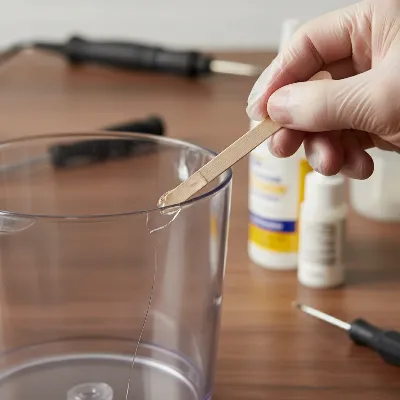 A hand applying clear food-grade epoxy to a small crack in a clear plastic food processor bowl, with a small mixing stick and gloves.
Important Safety Considerations and Best Practices
When performing DIY repairs on kitchen appliances, safety must be paramount.
- Food Safety Above All: Never use non-food-safe glues, epoxies, or sealants. These products can leach harmful chemicals into your food, especially when exposed to heat, acids, or constant moisture. Always verify that any adhesive used is FDA-approved, NSF 51 certified, or explicitly labeled for food contact.
- Structural Integrity: Understand that a repaired bowl, especially one that has suffered significant damage, may not regain its original strength. Avoid using a repaired bowl for very tough tasks (like kneading stiff dough or crushing ice) that put immense strain on the plastic. It’s safer to reserve it for lighter duties.
- Safety Mechanisms: Food processors have critical safety interlocks that prevent them from operating if the bowl or lid isn’t correctly seated. Any repair to locking tabs, handles, or the lid must not interfere with these mechanisms. If, after repair, the bowl feels loose or the safety switch isn’t fully engaged, do not use the appliance. A compromised safety mechanism is a significant hazard.
- Thorough Curing: Always adhere strictly to the adhesive manufacturer’s recommended curing times. Rushing the process can result in a weak bond that fails prematurely, potentially during use.
- Cleaning and Hygiene: After repair, ensure the bowl can still be thoroughly cleaned and sanitized. Any uneven surfaces or crevices created by the repair could harbor bacteria.
- Manufacturer Recommendations: Before attempting any repair, it’s wise to consult your food processor’s user manual. Some manufacturers may advise against certain repairs or recommend specific replacement parts, emphasizing safety.
Preventive Maintenance to Extend Bowl Life
The best repair is often preventing the damage in the first place. A few simple practices can significantly extend the life of your food processor bowl:
- Avoid Thermal Shock: Do not pour very hot liquids into a cold bowl, or immediately wash a hot bowl in cold water. Sudden temperature changes can stress the plastic and lead to cracks.
- Handle with Care: Always lift, carry, and lock the bowl gently. Avoid dropping it or forcing it onto the motor base.
- Do Not Overload: Respect the maximum capacity markings. Overloading places excessive strain on the motor, blade, and bowl, which can lead to cracks or breakage.
- Proper Cleaning: Follow cleaning instructions in your manual. Some bowls are dishwasher-safe, but others may be prone to cracking due to high heat in dishwashers. Handwashing with mild soap and warm water is often the gentlest option. Avoid abrasive cleaners or scouring pads.
- Store Safely: Store the bowl and lid securely where they won’t fall or be knocked over.
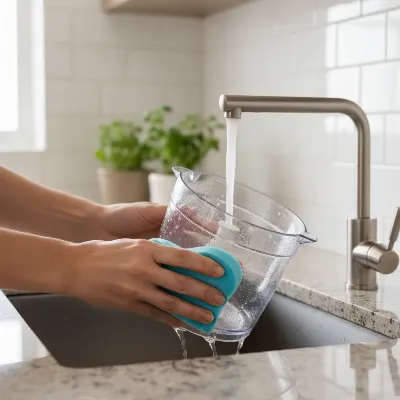 A food processor bowl being gently hand-washed with a soft sponge, illustrating proper cleaning for longevity.
Conclusion
While the sight of a broken food processor bowl can be frustrating, a DIY repair is often a feasible and rewarding project for minor damage. By carefully assessing the issue, selecting the correct food-safe materials, and meticulously following repair steps, you can breathe new life into your appliance. Remember to prioritize safety above all else, always using FDA-approved adhesives and ensuring that the structural integrity and safety mechanisms of your food processor remain uncompromised. When in doubt, or for extensive damage, opting for a replacement part or even a new unit is the safest choice. With a little care and the right approach, your food processor can continue to be a cherished assistant in your kitchen for years to come.
What’s your go-to kitchen appliance that you’ve successfully brought back from the brink?
Frequently Asked Questions
Is it safe to use a super-glued food processor bowl?
No, it is generally not safe to use regular super glue (cyanoacrylate) for Food Processor bowl repairs. Most super glues are not food-safe and can leach toxic chemicals into your food, especially when exposed to heat, moisture, or acidic ingredients. Always opt for FDA-approved, food-grade epoxies or silicone sealants specifically designed for food contact applications.
Can I use any silicone sealant for food processor repairs?
No, you should only use 100% food-grade silicone sealants that are explicitly labeled as “NSF 51 Certified” or “suitable for food equipment.” Standard bathroom or household silicone sealants often contain mold inhibitors and other chemicals that are not safe for food contact and can be harmful if they leach into your food.
How long do food processor bowl repairs last?
The longevity of a DIY repair depends heavily on the type of damage, the quality of the repair, the adhesive used, and how the bowl is subsequently handled. Minor cracks repaired with food-grade epoxy can last a long time if properly cured and not subjected to extreme stress. Repairs to high-stress areas like locking tabs or handles may be less durable and might only serve as a temporary solution.
Where can I buy food-safe adhesives?
Food-safe adhesives, such as FDA-compliant epoxies or NSF 51 certified silicone sealants, can be found at specialized hardware stores, marine supply stores, or online retailers. Look for reputable brands that clearly state their products are safe for direct or indirect food contact and meet relevant safety certifications. Always double-check product specifications before purchase.