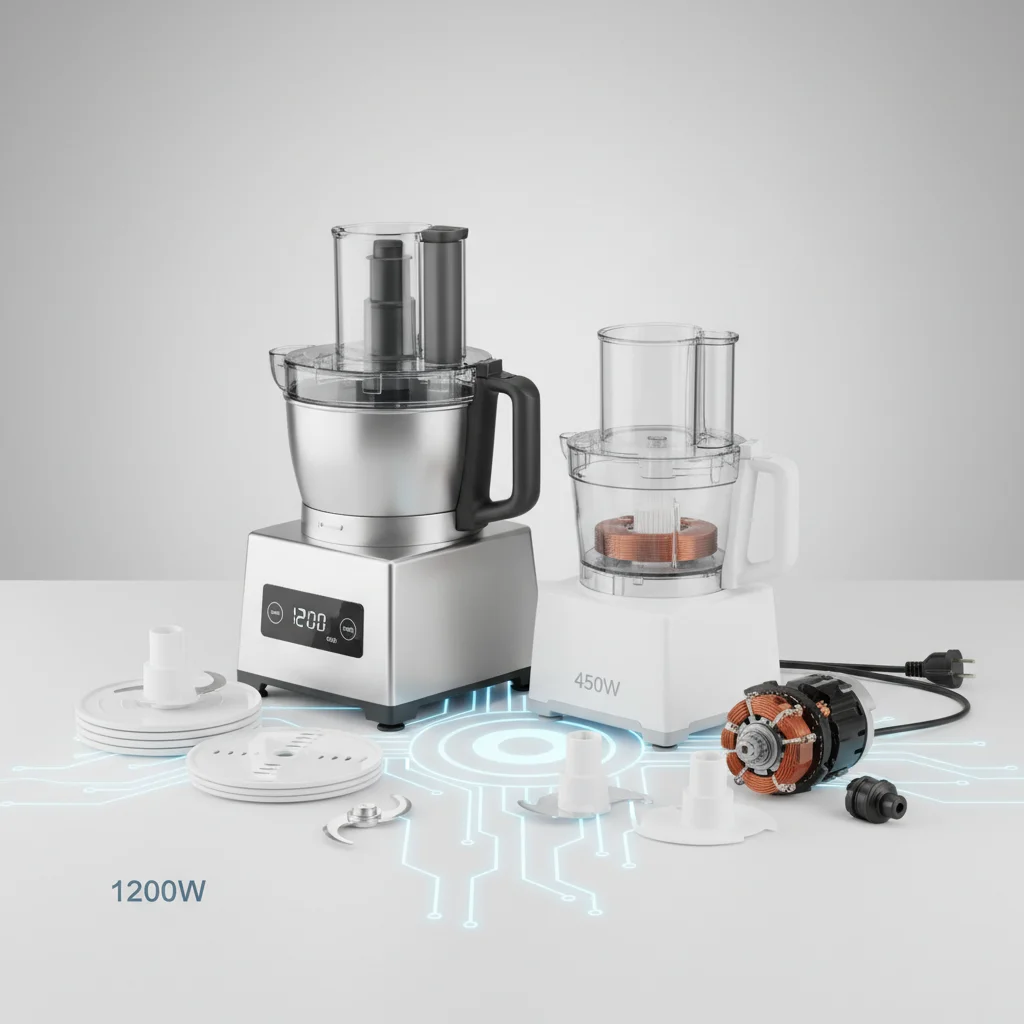
Understanding food processor wattage is crucial for selecting an appliance that meets your culinary demands without overspending. For most home cooks, a food processor with 600 to 700 watts provides ample power for everyday tasks like chopping, slicing, and shredding. However, if you frequently tackle tougher jobs such as kneading dough or grinding nuts, you’ll want to consider models with 1000 watts or more.
Why Wattage Matters for Food Processors
The wattage of a food processor directly correlates to its motor’s power and efficiency. A higher wattage generally means a more robust motor capable of handling dense ingredients and prolonged use without overheating or stalling. This is particularly important for tasks that require sustained power, like making nut butter or processing large batches of vegetables. Lower wattage models, while more energy-efficient, might struggle with these demanding tasks, leading to a shorter lifespan or less consistent results. For shop curated food processor on this site.
Matching Wattage to Your Culinary Needs
Your ideal food processor wattage depends entirely on your typical usage. For light tasks such as making salsa, chopping herbs, or slicing cucumbers, a compact food processor with 300-500 watts is often sufficient. These models are typically more affordable and take up less counter space. For a versatile kitchen workhorse that can handle a wider range of recipes, including making purees, shredding cheese, and mixing batters, aim for the 600-700 watt range. This mid-range offers a good balance of power and value.
- Light Use (300-500W): Ideal for small batches, herbs, sauces, and quick chopping.
- Medium Use (600-700W): Great for everyday cooking, slicing, shredding, and most pureeing tasks.
- Heavy Use (1000W+): Essential for kneading dough, grinding meat, making nut butter, and processing large quantities.
- Professional Use (1200W+): Designed for continuous operation and very demanding tasks in commercial settings.
The Impact of Wattage on Performance and Durability
|
Our Picks for the Best Food Processor in 2026
As an Amazon Associate I earn from qualifying purchases.
|
||
| Num | Product | Action |
|---|---|---|
| 1 | Ninja Food Processor, Professional Plus, 1000 Peak Watts, 4 Functions for Chopping, Slicing, Purees & Dough with 9-Cup Processor Bowl, 3 Blades, Food Chute & Pusher, Silver, BN601 |

|
| 2 | Ninja Food Processor, Professional XL, 1200 Peak-Watts, 4-in-1, Chopping, Slicing/Shredding, Purees, Dough, 12-Cup Processor Bowl, 2 Blades & 2 Discs, Feed Chute/Pusher, Black, NF701 |
|
| 3 | Hamilton Beach Food Processor & Vegetable Chopper for Slicing, Shredding, Mincing, and Puree, 10 Cups + Easy Clean Bowl Scraper, Black and Stainless Steel (70730) |
|
| 4 | Ninja BN600 Professional Food Processor (Renewed) |
|
| 5 | Cuisinart 5-cup Chop & Shred Food Processor, Silver, FP-5 |
|
| 6 | Hamilton Beach Food Processor & Vegetable Chopper for Slicing, Shredding, Mincing, and Puree, 8 Cup, Black |
|
| 7 | BLACK+DECKER 8-Cup Food Processor, Easy Assembly, Stainless Steel S-Blade, Shred, Slice, Chop, Puree, 450W Motor |
|
| 8 | BLACK+DECKER 3-in-1 Easy Assembly 8-Cup Food Processor, Stainless Steel S-Blade, Easy-Clean, Touchpad Controls Black |
|
| 9 | Ninja Kitchen System | 8-Cup Food Processor Bowl & 72 oz. Blender All-in-One | With (2) 16 oz. To-Go Cups | For Smoothies, Ice Crushing, Dough & More | 1500 Watt | Black | BL770 |
|
| 10 | Hamilton Beach Stack & Snap Food Processor and Vegetable Chopper, BPA Free, Stainless Steel Blades, 12 Cup Bowl, 2-Speed 450 Watt Motor, Black (70725A) |
|
Beyond just raw power, wattage also influences the overall performance and durability of your food processor. A higher wattage motor tends to operate more smoothly and quietly, as it doesn’t have to strain as much to process ingredients. This reduces wear and tear on the motor and other components, potentially extending the appliance’s lifespan. Conversely, consistently overworking a low-wattage food processor can lead to motor burnout and premature failure. Investing in a model with appropriate wattage for your needs can save you money and frustration in the long run.
Consider the Cuisinart Custom 14-Cup Food Processor, which typically features a 720-watt motor. This power level is excellent for handling a wide variety of tasks, from chopping vegetables to kneading bread dough, making it a popular choice for home kitchens.
Energy Consumption and Other Considerations
While higher wattage implies more power, it also means higher energy consumption. However, the difference in electricity cost for a home appliance like a food processor, which is used intermittently, is usually negligible. More important factors to consider alongside wattage include the quality of the blades, the capacity of the work bowl, and the availability of different attachments. A high-wattage motor with dull blades or a poorly designed bowl won’t deliver optimal results. Always look for a balance of features that complement the motor’s power.
For those seeking robust performance, the Breville Sous Chef 16 Pro often boasts a 1200-watt induction motor. This powerful motor, combined with its durable construction and versatile attachments, makes it suitable for even the most demanding culinary projects.
