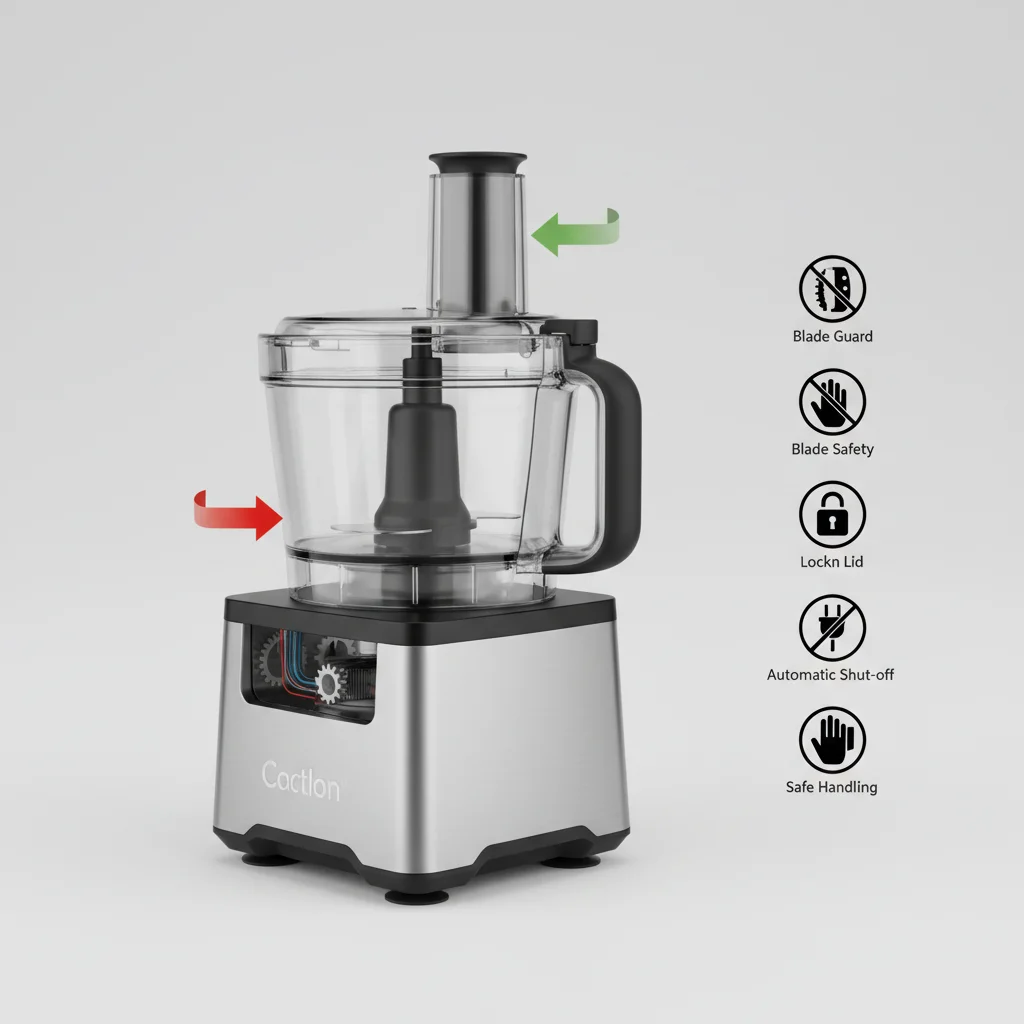
When purchasing a new food processor, understanding its safety features is paramount to preventing accidents and ensuring a smooth culinary experience. The most critical safety features to prioritize include interlocking lids, non-slip bases, and overload protection. These mechanisms work in concert to prevent operation when components are not correctly assembled, keep the unit stable during use, and protect the motor from damage due to excessive strain.
Interlocking Lids and Bowls: Essential for Safe Operation
An interlocking lid and bowl system is arguably the most important safety feature on any modern food processor. This mechanism prevents the motor from engaging unless the bowl is securely locked onto the base and the lid is properly sealed. This design eliminates the risk of blades spinning while the unit is open, which could lead to severe injury. Always check for clear indicators that the lid and bowl are correctly aligned and locked before powering on the appliance. Many models feature audible clicks or visual cues to confirm proper assembly.
Non-Slip Bases and Suction Cups: Stability During Use
A food processor generates significant torque, especially when processing dense ingredients. A non-slip base, often equipped with suction cups or rubberized feet, is crucial for keeping the appliance firmly planted on your countertop. This prevents the unit from moving, vibrating excessively, or even falling during operation, which could cause spills, damage, or injury. Before each use, ensure the countertop surface is clean and dry to maximize the grip of the non-slip base.
Overload Protection: Safeguarding Your Appliance
|
Our Picks for the Best Food Processor in 2026
As an Amazon Associate I earn from qualifying purchases.
|
||
| Num | Product | Action |
|---|---|---|
| 1 | Cuisinart 5-cup Chop & Shred Food Processor, Silver, FP-5 |

|
| 2 | Ninja Kitchen System | 8-Cup Food Processor Bowl & 72 oz. Blender All-in-One | With (2) 16 oz. To-Go Cups | For Smoothies, Ice Crushing, Dough & More | 1500 Watt | Black | BL770 |
|
| 3 | Hamilton Beach Food Processor & Vegetable Chopper for Slicing, Shredding, Mincing, and Puree, 10 Cups + Easy Clean Bowl Scraper, Black and Stainless Steel (70730) |
|
| 4 | BLACK+DECKER 8-Cup Food Processor, Easy Assembly, Stainless Steel S-Blade, Shred, Slice, Chop, Puree, 450W Motor |
|
| 5 | BLACK+DECKER 3-in-1 Easy Assembly 8-Cup Food Processor, Stainless Steel S-Blade, Easy-Clean, Touchpad Controls Black |
|
| 6 | Hamilton Beach Food Processor & Vegetable Chopper for Slicing, Shredding, Mincing, and Puree, 8 Cup, Black |
|
| 7 | Hamilton Beach Stack & Snap Food Processor and Vegetable Chopper, BPA Free, Stainless Steel Blades, 12 Cup Bowl, 2-Speed 450 Watt Motor, Black (70725A) |
|
| 8 | Ninja Food Processor, Professional Plus, 1000 Peak Watts, 4 Functions for Chopping, Slicing, Purees & Dough with 9-Cup Processor Bowl, 3 Blades, Food Chute & Pusher, Silver, BN601 |
|
| 9 | Ninja Food Processor, Professional XL, 1200 Peak-Watts, 4-in-1, Chopping, Slicing/Shredding, Purees, Dough, 12-Cup Processor Bowl, 2 Blades & 2 Discs, Feed Chute/Pusher, Black, NF701 |
|
| 10 | Ninja BN600 Professional Food Processor (Renewed) |
|
Overload protection is a vital internal safety mechanism that prevents the motor from overheating or burning out due to excessive strain. If you attempt to process too much food at once or ingredients that are too hard, the overload protection will automatically shut down the unit. This not only protects the motor but also prevents potential electrical hazards. After an overload shutdown, it’s typically recommended to unplug the unit, remove some of the contents, and allow it to cool down for a few minutes before attempting to restart.
Blade Safety and Storage: Handling with Care
Food processor blades are exceptionally sharp and require careful handling. Many food processors come with specialized storage cases or sleeves for their blades, which is a significant safety feature. Always use these protective covers when blades are not in use to prevent accidental cuts. When cleaning, use a brush or sponge with a handle rather than your bare hands to avoid direct contact with the cutting edges. Never reach into the food processor bowl when the blades are installed, even if the unit is unplugged.
Pulse Function and Speed Control: Enhanced User Control
While not strictly a ‘safety feature’ in the same vein as interlocks, the pulse function and variable speed control contribute significantly to safe operation by giving the user greater control over the processing. The pulse function allows for short bursts of power, reducing the risk of over-processing or jamming the motor. Variable speed settings enable you to start at a lower speed for delicate tasks and gradually increase as needed, preventing ingredients from splashing out or the unit from struggling unnecessarily.
- Always ensure the food processor is unplugged before assembling, disassembling, or cleaning.
- Never operate the food processor with a damaged power cord or plug.
- Keep hands and utensils away from moving blades during operation.
- Do not overfill the food processor bowl beyond the maximum fill line.
- Store blades and small attachments out of reach of children.
