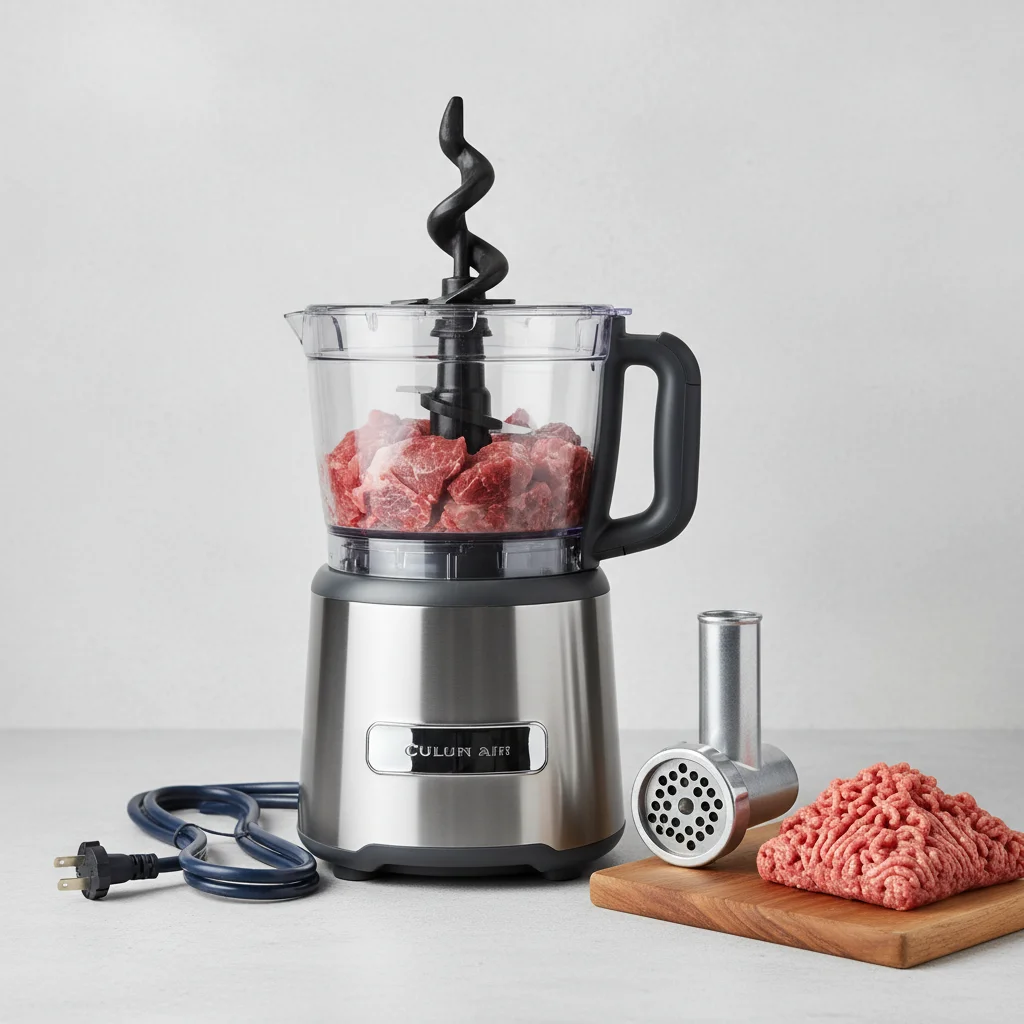
Choosing the right food processor for grinding meat can significantly streamline your kitchen tasks. For home use, models with at least a 700-watt motor and a sturdy S-blade are generally recommended to handle various cuts of meat effectively. These specifications ensure consistent results without overworking the appliance.
Why Use a Food Processor for Grinding Meat?
Using a food processor to grind meat offers several advantages over traditional grinders or manual methods. It’s faster, often easier to clean, and allows for greater control over the texture of the grind. This is particularly useful for making homemade sausages, meatballs, or even pet food, where specific coarseness is desired. The powerful motors and sharp blades found in many modern food processors are well-suited for breaking down muscle fibers efficiently.
Furthermore, a food processor can be a more versatile appliance in your kitchen, performing multiple functions beyond just meat grinding. This can save counter space and reduce the need for specialized equipment. When selecting a model, look for one with a wide feed tube to minimize pre-cutting, and a robust construction that can withstand the demands of grinding tougher meats.
Key Features for Effective Meat Grinding
When evaluating food processors for meat grinding, several features stand out as crucial. A powerful motor, typically 700 watts or higher, is essential for processing tougher cuts without stalling. The blade design is equally important; a strong, sharp S-blade made from high-quality stainless steel will provide the best results. Bowl capacity also plays a role, with 10-14 cup models being ideal for most home cooks to avoid grinding in multiple small batches.
Consider models that offer multiple speed settings, as this allows for greater control over the grind’s texture. A pulse function is particularly useful for achieving a coarse grind or for starting the process with larger chunks of meat. Durability of the bowl and lid is also key, as these components will be under stress during the grinding process.
- Powerful motor (700+ watts) for efficient processing.
- Durable, sharp stainless steel S-blade for consistent grinding.
- Generous bowl capacity (10-14 cups) to handle larger quantities.
- Multiple speed settings and a pulse function for texture control.
- Sturdy construction of bowl and lid for longevity.
Preparing Meat for Grinding in a Food Processor
|
Our Picks for the Best Food Processor in 2026
As an Amazon Associate I earn from qualifying purchases.
|
||
| Num | Product | Action |
|---|---|---|
| 1 | Hamilton Beach Food Processor & Vegetable Chopper for Slicing, Shredding, Mincing, and Puree, 8 Cup, Black |

|
| 2 | Ninja Kitchen System | 8-Cup Food Processor Bowl & 72 oz. Blender All-in-One | With (2) 16 oz. To-Go Cups | For Smoothies, Ice Crushing, Dough & More | 1500 Watt | Black | BL770 |
|
| 3 | BLACK+DECKER 3-in-1 Easy Assembly 8-Cup Food Processor, Stainless Steel S-Blade, Easy-Clean, Touchpad Controls Black |
|
| 4 | Ninja Food Processor, Professional XL, 1200 Peak-Watts, 4-in-1, Chopping, Slicing/Shredding, Purees, Dough, 12-Cup Processor Bowl, 2 Blades & 2 Discs, Feed Chute/Pusher, Black, NF701 |
|
| 5 | Ninja BN600 Professional Food Processor (Renewed) |
|
| 6 | BLACK+DECKER 8-Cup Food Processor, Easy Assembly, Stainless Steel S-Blade, Shred, Slice, Chop, Puree, 450W Motor |
|
| 7 | Ninja Food Processor, Professional Plus, 1000 Peak Watts, 4 Functions for Chopping, Slicing, Purees & Dough with 9-Cup Processor Bowl, 3 Blades, Food Chute & Pusher, Silver, BN601 |
|
| 8 | Hamilton Beach Stack & Snap Food Processor and Vegetable Chopper, BPA Free, Stainless Steel Blades, 12 Cup Bowl, 2-Speed 450 Watt Motor, Black (70725A) |
|
| 9 | Hamilton Beach Food Processor & Vegetable Chopper for Slicing, Shredding, Mincing, and Puree, 10 Cups + Easy Clean Bowl Scraper, Black and Stainless Steel (70730) |
|
| 10 | Cuisinart 5-cup Chop & Shred Food Processor, Silver, FP-5 |
|
Proper preparation of your meat is vital for successful grinding in a food processor. Always start with meat that is very cold, ideally partially frozen for about 15-30 minutes. This firms up the meat, making it easier for the blades to cut cleanly rather than smearing. Cut the meat into 1-inch cubes or strips that will fit comfortably through the feed tube without forcing.
Remove any large pieces of gristle, bone, or excessive fat, as these can clog the blades or put undue strain on the motor. While some fat is desirable for flavor and moisture, trimming large chunks will improve the grinding process and the final texture. Process the meat in batches, filling the bowl no more than two-thirds full, to ensure even grinding and prevent the motor from overheating.
Recommended Food Processors for Meat Grinding
For those serious about grinding meat at home, certain food processors consistently receive high marks for their performance and durability. The Cuisinart Custom 14-Cup Food Processor is a popular choice, known for its powerful motor and robust S-blade that handles various meats with ease. Its large capacity is also a significant advantage for batch processing.
Another excellent option is the Breville Sous Chef 12-Cup Food Processor. While slightly smaller in capacity, its powerful induction motor and wide feed chute make it incredibly efficient for meat grinding. It also comes with a variety of blades, though the standard S-blade is what you’ll primarily use for this task. Both models offer the reliability and power needed for consistent meat grinding results.
Maintenance and Cleaning After Grinding Meat
After grinding meat, thorough cleaning of your food processor is crucial for hygiene and to maintain the appliance’s longevity. Disassemble all removable parts immediately after use. Wash the bowl, lid, and blade in hot, soapy water. Pay special attention to the blade, ensuring no meat particles are lodged in crevices. Many parts are dishwasher safe, but always check your specific model’s manual.
For the motor base, wipe it down with a damp cloth. Never immerse the motor base in water. Regular cleaning prevents the buildup of food residue and odors, ensuring your food processor is always ready for its next task. Proper storage of the blades and other attachments will also help maintain their sharpness and condition over time.

I picked up a Breville based on the advice here, specifically for making pet food. It does a fantastic job with chicken and beef, and I love being able to control the texture for my dog’s sensitive stomach. My only minor complaint is that the feed tube could be a little wider for larger chunks of meat, but it’s not a dealbreaker.
I got a mid-range model, around $150, hoping it would replace my old meat grinder for meatballs. While it works for smaller batches and softer cuts, I found it struggled a bit with tougher beef cuts when I tried to do a larger quantity. It’s faster to clean than my old grinder, but I might need to upgrade to a more powerful professional model for my needs.
This was so helpful! I was hesitant about using a food processor for grinding meat, but the explanation about the S-blade and motor power convinced me. I made the best homemade burgers last night with freshly ground chuck. The texture was perfect, and it was so much quicker than I expected.
I’ve been wanting to make my own sausages for ages, and finally decided to get a food processor for grinding meat. The recommendation for a 700-watt motor was spot on. My new Cuisinart handled pork shoulder like a champ, and cleanup was surprisingly easy. Definitely a game-changer for homemade charcuterie!