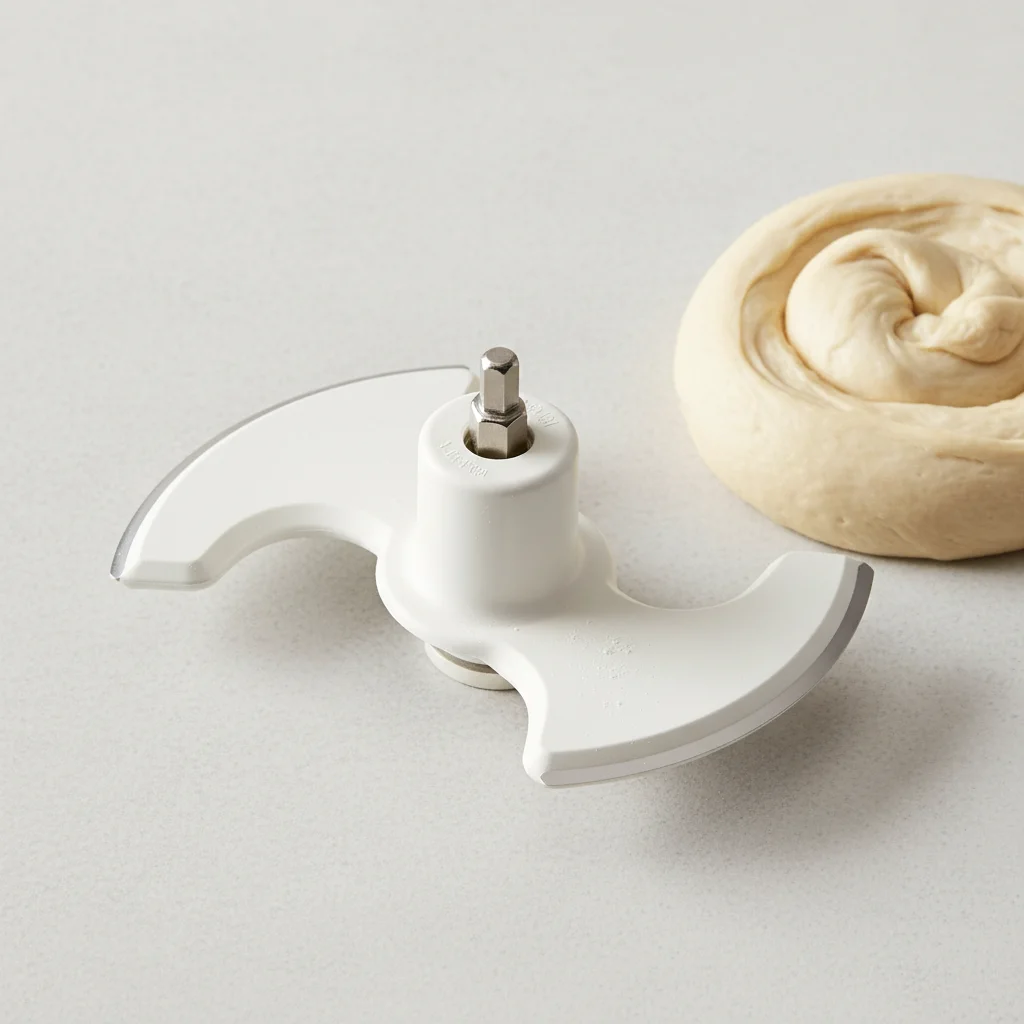
A food processor dough blade is a specialized attachment designed to efficiently mix and knead various types of dough, from bread to pastry. While not every food processor includes one, for avid bakers, it can be a game-changer, significantly reducing prep time and effort compared to hand-kneading or using a stand mixer. The unique design of these blades, often plastic and blunt, is engineered to fold and push dough rather than cut it, preventing over-processing and ensuring a smooth, elastic consistency.
Understanding the Dough Blade’s Design and Function
Unlike the sharp S-blade used for chopping and pureeing, a dough blade typically features a blunt, often plastic, design. Its primary function is to mimic the action of hand-kneading, gently folding and pushing the dough to develop gluten without tearing it. This design prevents the dough from becoming tough or over-processed, which can happen with standard metal blades. The slower, more controlled movement of the dough blade ensures even mixing of ingredients and proper gluten development, crucial for achieving the desired texture in breads, pizzas, and pastries. For expert food processor reviews on this site.
Types of Dough and Best Uses
The food processor dough blade excels with a variety of doughs. It’s particularly effective for yeast-based doughs like pizza dough, focaccia, and artisan bread, where proper gluten development is key. It also handles quick bread batters, cookie dough, and pie crusts with ease, often achieving a more consistent mix than manual methods. For very stiff doughs or extremely large batches, a heavy-duty stand mixer might still be preferred, but for most home baking needs, the food processor dough blade is highly capable.
- Pizza Dough: Achieves perfect elasticity for a chewy crust.
- Bread Dough: Develops gluten efficiently for airy loaves.
- Pie Crust: Prevents overworking, resulting in flaky pastry.
- Cookie Dough: Mixes ingredients thoroughly without over-creaming.
- Focaccia: Creates a soft, pliable dough with minimal effort.
Advantages Over Hand Kneading and Stand Mixers
|
Our Picks for the Best Food Processor in 2026
As an Amazon Associate I earn from qualifying purchases.
|
||
| Num | Product | Action |
|---|---|---|
| 1 | Ninja Food Processor, Professional Plus, 1000 Peak Watts, 4 Functions for Chopping, Slicing, Purees & Dough with 9-Cup Processor Bowl, 3 Blades, Food Chute & Pusher, Silver, BN601 |

|
| 2 | Ninja BN600 Professional Food Processor (Renewed) |
|
| 3 | BLACK+DECKER 3-in-1 Easy Assembly 8-Cup Food Processor, Stainless Steel S-Blade, Easy-Clean, Touchpad Controls Black |
|
| 4 | Hamilton Beach Food Processor & Vegetable Chopper for Slicing, Shredding, Mincing, and Puree, 8 Cup, Black |
|
| 5 | Hamilton Beach Food Processor & Vegetable Chopper for Slicing, Shredding, Mincing, and Puree, 10 Cups + Easy Clean Bowl Scraper, Black and Stainless Steel (70730) |
|
| 6 | Ninja Food Processor, Professional XL, 1200 Peak-Watts, 4-in-1, Chopping, Slicing/Shredding, Purees, Dough, 12-Cup Processor Bowl, 2 Blades & 2 Discs, Feed Chute/Pusher, Black, NF701 |
|
| 7 | Cuisinart 5-cup Chop & Shred Food Processor, Silver, FP-5 |
|
| 8 | Ninja Kitchen System | 8-Cup Food Processor Bowl & 72 oz. Blender All-in-One | With (2) 16 oz. To-Go Cups | For Smoothies, Ice Crushing, Dough & More | 1500 Watt | Black | BL770 |
|
| 9 | Hamilton Beach Stack & Snap Food Processor and Vegetable Chopper, BPA Free, Stainless Steel Blades, 12 Cup Bowl, 2-Speed 450 Watt Motor, Black (70725A) |
|
| 10 | BLACK+DECKER 8-Cup Food Processor, Easy Assembly, Stainless Steel S-Blade, Shred, Slice, Chop, Puree, 450W Motor |
|
Compared to hand-kneading, the food processor dough blade offers significant time savings and less physical exertion. It can achieve a well-kneaded dough in mere minutes, whereas hand-kneading can take 10-15 minutes of continuous effort. When stacked against a stand mixer, a food processor can be more compact and, for smaller batches, equally effective. It’s also often easier to clean than a stand mixer’s bowl and dough hook. For those with limited counter space or who bake frequently but not in industrial quantities, the food processor with a dough blade presents a compelling alternative.
Tips for Optimal Dough Blade Performance
To get the best results from your food processor dough blade, always add liquids through the feed tube while the processor is running. This allows the flour to hydrate gradually and prevents the dough from clumping. Avoid over-processing; most doughs are ready in 60-90 seconds. Monitor the dough’s consistency – it should form a ball and clean the sides of the bowl. For sticky doughs, a light dusting of flour can help. Always refer to your food processor’s manual for specific capacity limits to prevent motor strain.
Is a Dough Blade a Necessary Investment?
For casual bakers who only occasionally make dough, a dedicated dough blade might not be essential; the standard S-blade can often handle lighter doughs in a pinch. However, for anyone who bakes bread, pizza, or pastries regularly, the dough blade is a worthwhile investment. It streamlines the process, ensures consistent results, and makes baking more enjoyable and less labor-intensive. Consider your baking frequency and the types of doughs you typically prepare to determine if this specialized attachment will truly enhance your culinary toolkit.
