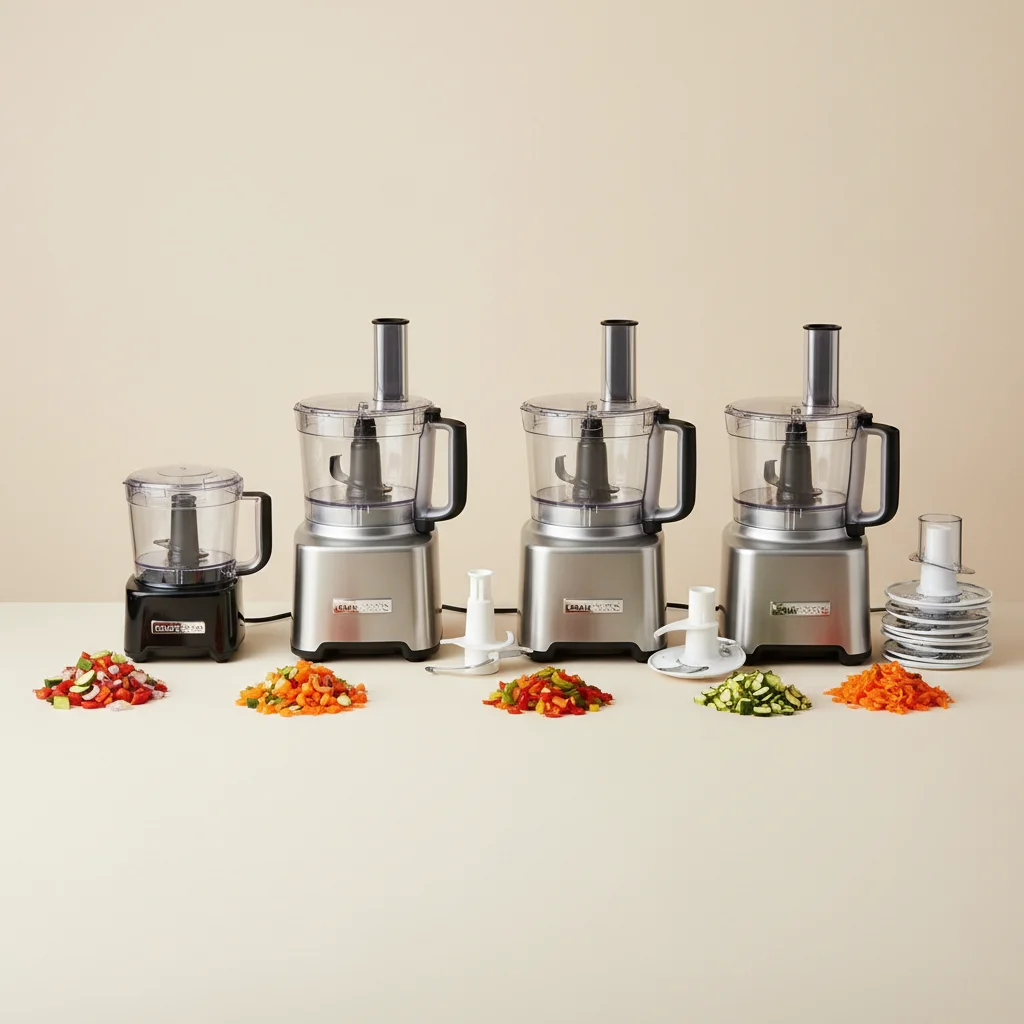
Choosing the right food processor capacity is crucial for efficient meal prep, and it largely depends on your household size and typical cooking tasks. For most individuals or couples, a 7-cup food processor offers a versatile balance, while larger families or frequent entertainers might find a 12-cup model more suitable. Understanding the different capacity ranges and their ideal uses will help you make an informed decision that prevents both under-utilization and frustration.
Understanding Food Processor Capacity Ranges
Food processors come in a variety of sizes, typically measured in cups. These capacities dictate how much food you can process at once, directly impacting your efficiency in the kitchen. Small food processors, often 3-5 cups, are perfect for single servings, dressings, or chopping herbs. Medium-sized processors, ranging from 7-10 cups, are the most popular choice for everyday cooking, handling everything from chopping vegetables to making dough for a small loaf of bread. Large food processors, 11 cups and above, are designed for batch cooking, large families, or serious home chefs who frequently prepare meals for gatherings.
Matching Capacity to Your Household Size
Your household size is a primary factor in determining the ideal food processor capacity. For a single person or a couple, a 7-cup model is often sufficient for most tasks, allowing you to prepare meals without excessive batches. Families of three to four will likely benefit from a 9-cup or 10-cup food processor, which can handle larger quantities of ingredients for family dinners. If you have a large family (five or more people) or frequently host dinner parties, a 12-cup or even 14-cup food processor will save you considerable time and effort, enabling you to process significant volumes of food in one go.
Considering Your Typical Cooking Tasks
|
Our Picks for the Best Food Processor in 2026
As an Amazon Associate I earn from qualifying purchases.
|
||
| Num | Product | Action |
|---|---|---|
| 1 | Ninja Food Processor, Professional XL, 1200 Peak-Watts, 4-in-1, Chopping, Slicing/Shredding, Purees, Dough, 12-Cup Processor Bowl, 2 Blades & 2 Discs, Feed Chute/Pusher, Black, NF701 |

|
| 2 | Ninja BN600 Professional Food Processor (Renewed) |
|
| 3 | Ninja Food Processor, Professional Plus, 1000 Peak Watts, 4 Functions for Chopping, Slicing, Purees & Dough with 9-Cup Processor Bowl, 3 Blades, Food Chute & Pusher, Silver, BN601 |
|
| 4 | Cuisinart 5-cup Chop & Shred Food Processor, Silver, FP-5 |
|
| 5 | Hamilton Beach Stack & Snap Food Processor and Vegetable Chopper, BPA Free, Stainless Steel Blades, 12 Cup Bowl, 2-Speed 450 Watt Motor, Black (70725A) |
|
| 6 | Hamilton Beach Food Processor & Vegetable Chopper for Slicing, Shredding, Mincing, and Puree, 8 Cup, Black |
|
| 7 | BLACK+DECKER 8-Cup Food Processor, Easy Assembly, Stainless Steel S-Blade, Shred, Slice, Chop, Puree, 450W Motor |
|
| 8 | BLACK+DECKER 3-in-1 Easy Assembly 8-Cup Food Processor, Stainless Steel S-Blade, Easy-Clean, Touchpad Controls Black |
|
| 9 | Hamilton Beach Food Processor & Vegetable Chopper for Slicing, Shredding, Mincing, and Puree, 10 Cups + Easy Clean Bowl Scraper, Black and Stainless Steel (70730) |
|
| 10 | Ninja Kitchen System | 8-Cup Food Processor Bowl & 72 oz. Blender All-in-One | With (2) 16 oz. To-Go Cups | For Smoothies, Ice Crushing, Dough & More | 1500 Watt | Black | BL770 |
|
Beyond household size, the types of dishes you regularly prepare should influence your capacity choice. If you primarily use a food processor for chopping small amounts of garlic, nuts, or making dips, a compact 3-cup or 5-cup model might be all you need. However, if you frequently make dough, shred large quantities of cheese, or prepare purees and sauces in bulk, a larger capacity is essential. For example, kneading dough for a standard loaf of bread typically requires at least a 7-cup bowl, while making a large batch of hummus might necessitate a 10-cup or 12-cup model to avoid overflow.
The Benefits of a Versatile 7-Cup Food Processor
For many home cooks, a 7-cup food processor strikes an excellent balance between compactness and functionality. It’s large enough to handle most everyday tasks, such as chopping onions, slicing vegetables for a salad, or making a batch of pesto, without taking up excessive counter space. This size is also generally more affordable than larger models and easier to store. While it might require processing in batches for very large recipes, its versatility makes it a popular choice for individuals and small families who want a reliable kitchen workhorse without the bulk of a professional-grade machine.
When to Upgrade to a Larger Capacity
If you find yourself constantly overflowing your current food processor, or if you’re spending too much time processing ingredients in multiple small batches, it’s a clear sign you need a larger capacity. This is especially true for those who enjoy entertaining, meal prepping for the week, or baking frequently. A larger food processor, such as a 12-cup or 14-cup model, can significantly reduce your prep time and make cooking more enjoyable. Look for models with powerful motors to handle the increased load effectively.
Key Considerations for Choosing Capacity
- Household Size: Single/Couple (3-7 cups), Small Family (7-10 cups), Large Family/Entertainer (11+ cups).
- Cooking Habits: Small tasks (3-5 cups), Everyday cooking (7-10 cups), Batch cooking/Baking (11+ cups).
- Storage Space: Larger units require more counter and cabinet space.
- Motor Power: Larger capacities often come with more powerful motors, which is crucial for handling heavy loads like dough.
- Budget: Generally, larger capacities come with a higher price tag.
