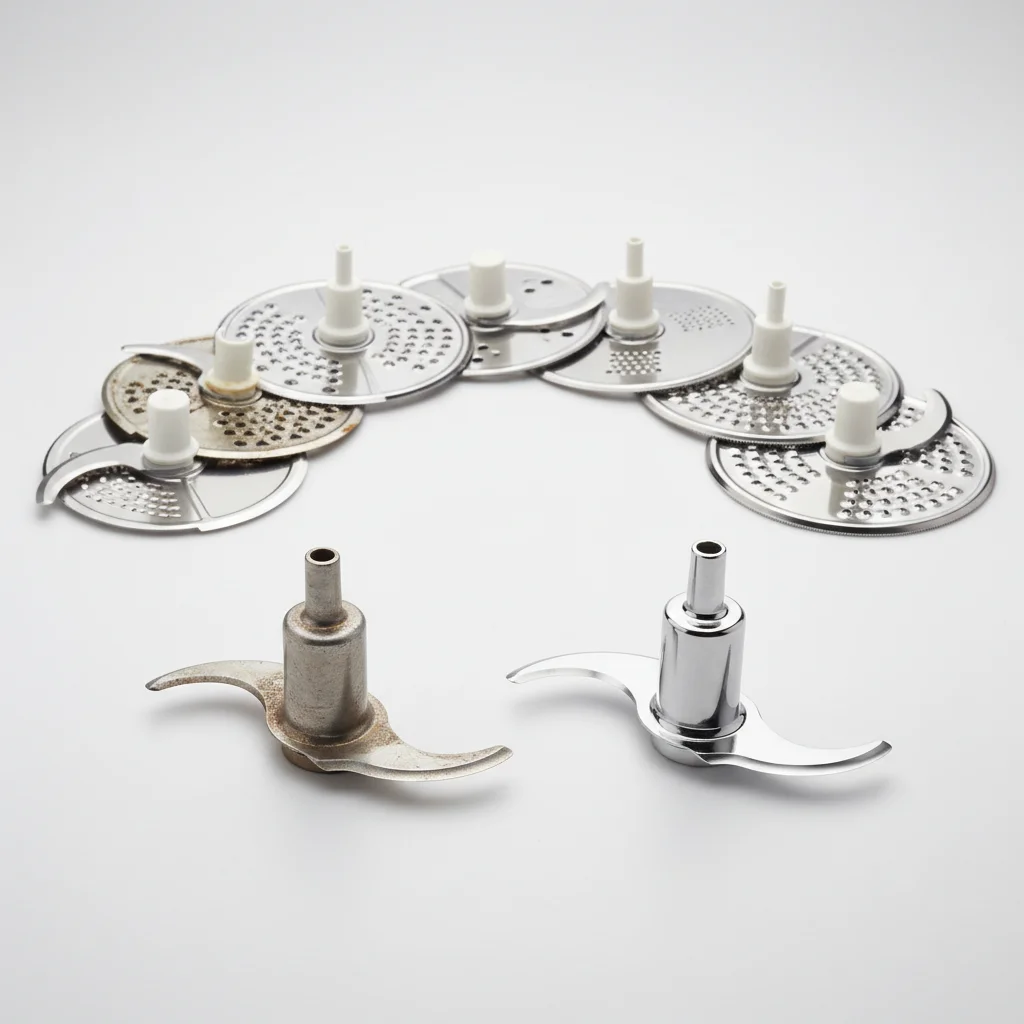
Understanding when to replace your food processor blades is crucial for maintaining optimal performance and ensuring consistent results in your kitchen. Generally, food processor blades should be replaced every 2-5 years, depending on usage frequency and the types of foods processed. Dull or damaged blades not only make food preparation more difficult but can also strain your appliance’s motor, potentially shortening its lifespan. Recognizing the signs of wear and tear will help you decide the right time for a replacement.
Signs Your Food Processor Blades Need Replacing
Several indicators suggest your food processor blades are no longer performing at their best. One of the most obvious signs is a noticeable decline in efficiency. If your processor struggles to chop, slice, or shred ingredients that it once handled with ease, or if you find yourself needing to process foods for longer durations to achieve the desired consistency, it’s likely due to dull blades. Another key indicator is uneven processing; if some pieces are finely chopped while others remain large, your blades are no longer cutting uniformly.
Visual inspection can also reveal issues. Look for nicks, bends, or cracks in the blade edges. Even minor damage can significantly impair performance and potentially create safety hazards. Rust spots, while less common on stainless steel blades, can also indicate a need for replacement, as rust can contaminate food and weaken the blade structure. Pay attention to any unusual noises during operation, as these could signal that the blades are struggling or are improperly seated.
Factors Influencing Blade Lifespan
The lifespan of your food processor blades is influenced by several factors. Frequent use, especially for tough ingredients like nuts, root vegetables, or frozen fruits, will naturally accelerate wear and tear. Blades used daily for heavy-duty tasks will likely require replacement sooner than those used occasionally for softer foods. The material quality of the blades also plays a significant role; higher-quality stainless steel blades tend to retain their sharpness longer than cheaper alternatives.
Proper cleaning and maintenance are equally important. Harsh detergents, abrasive scrubbers, or prolonged exposure to moisture can degrade blade quality over time. Always follow the manufacturer’s cleaning instructions and ensure blades are thoroughly dried before storage to prevent corrosion. Storing blades safely, away from other metal utensils, can also prevent accidental damage to their edges.
Choosing the Right Replacement Blades
|
Our Picks for the Best Food Processor in 2026
As an Amazon Associate I earn from qualifying purchases.
|
||
| Num | Product | Action |
|---|---|---|
| 1 | Ninja Food Processor, Professional XL, 1200 Peak-Watts, 4-in-1, Chopping, Slicing/Shredding, Purees, Dough, 12-Cup Processor Bowl, 2 Blades & 2 Discs, Feed Chute/Pusher, Black, NF701 |

|
| 2 | Hamilton Beach Food Processor & Vegetable Chopper for Slicing, Shredding, Mincing, and Puree, 8 Cup, Black |
|
| 3 | Ninja BN600 Professional Food Processor (Renewed) |
|
| 4 | Hamilton Beach Stack & Snap Food Processor and Vegetable Chopper, BPA Free, Stainless Steel Blades, 12 Cup Bowl, 2-Speed 450 Watt Motor, Black (70725A) |
|
| 5 | Ninja Kitchen System | 8-Cup Food Processor Bowl & 72 oz. Blender All-in-One | With (2) 16 oz. To-Go Cups | For Smoothies, Ice Crushing, Dough & More | 1500 Watt | Black | BL770 |
|
| 6 | BLACK+DECKER 3-in-1 Easy Assembly 8-Cup Food Processor, Stainless Steel S-Blade, Easy-Clean, Touchpad Controls Black |
|
| 7 | Hamilton Beach Food Processor & Vegetable Chopper for Slicing, Shredding, Mincing, and Puree, 10 Cups + Easy Clean Bowl Scraper, Black and Stainless Steel (70730) |
|
| 8 | BLACK+DECKER 8-Cup Food Processor, Easy Assembly, Stainless Steel S-Blade, Shred, Slice, Chop, Puree, 450W Motor |
|
| 9 | Cuisinart 5-cup Chop & Shred Food Processor, Silver, FP-5 |
|
| 10 | Ninja Food Processor, Professional Plus, 1000 Peak Watts, 4 Functions for Chopping, Slicing, Purees & Dough with 9-Cup Processor Bowl, 3 Blades, Food Chute & Pusher, Silver, BN601 |
|
When it’s time to replace your food processor blades, selecting the correct type is essential for compatibility and performance. Always refer to your food processor’s model number and manufacturer’s recommendations to ensure you purchase the exact replacement part. Generic blades may not fit properly or perform as effectively, potentially leading to further issues or even damage to your appliance.
Consider purchasing genuine OEM (Original Equipment Manufacturer) parts whenever possible. While they might be slightly more expensive, they guarantee a perfect fit and are designed to meet the specific performance standards of your food processor. Some manufacturers also offer upgraded blade sets that provide enhanced durability or specialized functions, which might be a worthwhile investment if you frequently perform specific tasks.
- Check your food processor’s model number for exact compatibility.
- Opt for genuine OEM replacement blades for best fit and performance.
- Consider upgraded blade sets for enhanced durability or specialized tasks.
- Read reviews to ensure the replacement blades meet quality expectations.
- Verify the return policy in case of an incorrect purchase.
The Benefits of Sharp Blades
Replacing dull blades with sharp ones offers numerous benefits that enhance your cooking experience. Firstly, sharp blades significantly reduce preparation time, allowing you to chop, slice, and shred ingredients much faster and more efficiently. This not only saves time but also makes cooking more enjoyable and less laborious.
Secondly, sharp blades produce more consistent and professional-looking results. Ingredients are uniformly processed, which is crucial for recipes that require precise cuts, such as salads, salsas, or finely minced herbs. This consistency also contributes to even cooking. Finally, sharp blades put less strain on your food processor’s motor, extending the life of your appliance and preventing costly repairs. Investing in new blades is a small cost compared to replacing an entire food processor.
