A food processor is a kitchen workhorse, indispensable for everything from finely dicing vegetables to kneading dough. Yet, few things are as frustrating as a lid that simply refuses to budge, leaving your culinary plans in limbo. If you’ve ever wrestled with a jammed food processor lid, you know the struggle is real. This common kitchen conundrum often arises from simple issues like food debris, a stubborn vacuum seal, or accidental misalignment, but it can quickly escalate into a battle of wills between you and your appliance. This guide will walk you through safe, effective, and simple solutions to free a stuck food processor lid, helping you get back to your cooking without unnecessary force or damage.
Understanding Your Food Processor Lid
Before diving into fixes, it’s helpful to understand how your food processor lid functions. Most lids feature a secure locking mechanism that engages with the bowl and often with the processor’s base for safety. This interlock prevents the motor from running unless the lid is correctly sealed, ensuring blades cannot spin freely. Key components include:
- Sealing Gasket: A rubber or silicone ring designed to create a tight seal, preventing leaks.
- Locking Tabs/Arms: Protrusions on the lid that align with slots or grooves on the bowl, twisting or latching into place.
- Safety Interlock Pin: A small pin or lever that must be depressed by the properly seated lid for the processor to operate.
|
Our Picks for the Best Food Processor in 2026
As an Amazon Associate I earn from qualifying purchases.
|
||
| Num | Product | Action |
|---|---|---|
| 1 | Ninja BN600 Professional Food Processor (Renewed) |

|
| 2 | BLACK+DECKER 3-in-1 Easy Assembly 8-Cup Food Processor, Stainless Steel S-Blade, Easy-Clean, Touchpad Controls Black |
|
| 3 | Hamilton Beach Stack & Snap Food Processor and Vegetable Chopper, BPA Free, Stainless Steel Blades, 12 Cup Bowl, 2-Speed 450 Watt Motor, Black (70725A) |
|
| 4 | Ninja Food Processor, Professional Plus, 1000 Peak Watts, 4 Functions for Chopping, Slicing, Purees & Dough with 9-Cup Processor Bowl, 3 Blades, Food Chute & Pusher, Silver, BN601 |
|
| 5 | Ninja Kitchen System | 8-Cup Food Processor Bowl & 72 oz. Blender All-in-One | With (2) 16 oz. To-Go Cups | For Smoothies, Ice Crushing, Dough & More | 1500 Watt | Black | BL770 |
|
| 6 | Hamilton Beach Food Processor & Vegetable Chopper for Slicing, Shredding, Mincing, and Puree, 8 Cup, Black |
|
| 7 | Cuisinart 5-cup Chop & Shred Food Processor, Silver, FP-5 |
|
| 8 | Hamilton Beach Food Processor & Vegetable Chopper for Slicing, Shredding, Mincing, and Puree, 10 Cups + Easy Clean Bowl Scraper, Black and Stainless Steel (70730) |
|
| 9 | Ninja Food Processor, Professional XL, 1200 Peak-Watts, 4-in-1, Chopping, Slicing/Shredding, Purees, Dough, 12-Cup Processor Bowl, 2 Blades & 2 Discs, Feed Chute/Pusher, Black, NF701 |
|
| 10 | BLACK+DECKER 8-Cup Food Processor, Easy Assembly, Stainless Steel S-Blade, Shred, Slice, Chop, Puree, 450W Motor |
|
Understanding these parts helps diagnose why a lid might be stuck.
Why Do Food Processor Lids Get Stuck?
Several factors can cause a food processor lid to become stubbornly affixed. Identifying the root cause can often guide you to the most effective solution.
- Food Debris and Dried Spills: Perhaps the most common culprit. Tiny particles of food, especially sticky or sugary residues, can dry and harden within the locking mechanism or under the seal, acting like superglue.
- Vacuum Seal: If you process warm ingredients and then immediately seal the lid, the cooling air inside can create a vacuum, effectively suctioning the lid onto the bowl. This is particularly common after washing with hot water.
- Incorrect Placement or Misalignment: Sometimes, the lid isn’t properly aligned or seated when it’s initially put on, causing it to jam when attempts are made to twist or latch it into place. Forcing it into the wrong position can exacerbate the problem.
- Over-tightening: While securing the lid is important, over-tightening can make it incredibly difficult to release, especially with twist-on designs.
- Safety Mechanism Engagement: Food processors are designed with safety in mind. If the bowl isn’t correctly seated on the motor base, or if a part of the lid’s safety interlock is bent or blocked, the lid might resist opening as a safety precaution.
- Plastic Expansion/Contraction: Extreme temperature changes can cause the plastic components to slightly expand or contract, making it harder for parts to move freely.
Safety First: Before You Begin
Your safety, and the integrity of your appliance, are paramount. Always follow these essential precautions:
- Unplug the Food Processor: Before attempting any troubleshooting, ensure the appliance is completely unplugged from the power outlet. This eliminates any risk of accidental activation of the blades.
- Do Not Force It: Applying excessive force can damage the lid, bowl, or even the motor base. Plastic parts can crack or break, making the problem worse and potentially rendering the processor unusable. Patience is key.
- Empty the Bowl (If Possible): If the lid is stuck with food inside, try to carefully empty the contents if there’s any way to access them. This reduces mess and weight.
Step-by-Step Guide to Unstick a Food Processor Lid
Here’s a breakdown of methods to try, starting with the simplest.
1. Gentle Wiggle and Tap
Often, a light touch is all that’s needed to dislodge a minor jam.
- Hold the food processor bowl firmly with one hand.
- With the other hand, gently but firmly grasp the lid.
- Try wiggling it slightly from side to side, and then attempting to twist it open.
- You can also try gently tapping around the rim of the lid with the palm of your hand, which can sometimes break a light seal or dislodge small debris.
2. Apply Warmth
Heat can help expand plastic slightly and soften dried food residues or break a vacuum seal.
- Hot Water Soak (Bowl Only): If the entire bowl with the lid is stuck, fill your sink with hot (not boiling) water. Submerge only the bowl section, ensuring the water doesn’t reach the food inside or the motor base if still attached. Let it soak for 5-10 minutes. The warmth should relax the plastic and loosen any dried bits.
- Warm Towel Method: Alternatively, soak a towel in hot water, wring it out, and wrap it around the edge of the lid where it meets the bowl. Let it sit for a few minutes before trying to twist the lid off.
> “Often, a temperature change is the simplest trick. Warming the external plastic can help it expand just enough to release a stubborn vacuum or dried-on goo.” – Chef Elena Rodriguez, Culinary Equipment Specialist
3. Lubricate the Seal
If dried residue or a tight seal is the issue, a little lubrication can work wonders.
- Turn the food processor bowl (with the lid still attached) upside down.
- Apply a few drops of food-grade oil (like vegetable oil or olive oil) around the seam where the lid meets the bowl.
- Allow the oil to penetrate for 5-10 minutes. This should lubricate the seal and any stuck particles, making it easier to twist.
- After waiting, gently try to twist and remove the lid.
4. Re-engage/Disengage Safety Lock
Sometimes the lid might be stuck because the safety interlock is engaged incorrectly.
- Ensure the bowl is perfectly seated on the motor base. If it’s even slightly off, the lid’s locking mechanism might not release.
- Attempt to slightly twist the bowl on the base, and then try the lid again. Sometimes, re-aligning the bowl can release the lid’s internal lock.
- Some models have a small button or lever on the handle that needs to be pressed while twisting the lid. Make sure this isn’t overlooked.
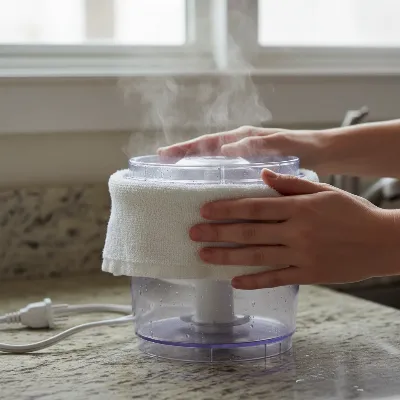 A person carefully applying a warm, damp towel to the base of a stuck food processor lid to loosen it
5. The “Plastic Strip” Trick
This clever hack can help break a seal or dislodge a stuck tab.
- Cut a thin strip (about 3mm wide and 20mm long) from a plastic zip-lock bag, a piece of scotch tape, or even a thin piece of paper.
- Carefully try to slide this strip into the tiny gap where the lid meets the bowl, especially near the locking tabs.
- Once inserted, try to gently jiggle or twist the lid. The plastic strip can act as a shim to release pressure or separate stuck surfaces. This technique is particularly useful if a specific notch or tab is getting caught.
6. Check for Food Obstructions
Visually inspect around the base of the lid and the rim of the bowl for any visible food particles that might be physically blocking the lid’s movement. Use a toothpick or a small brush to carefully dislodge any stubborn bits.
Preventative Measures
Prevention is always better than cure. Here’s how to minimize the chances of a stuck lid:
- Proper Cleaning: Always thoroughly clean the lid and bowl, paying special attention to the sealing gasket and locking mechanisms, immediately after use. This prevents food residue from drying and hardening.
- Avoid Overfilling: Overfilling the bowl can push food into the lid’s crevices, leading to jams.
- Correct Lid Placement: Always ensure the lid is aligned correctly before attempting to lock it into place. Don’t force it.
- Store Loosely: When storing your food processor, avoid sealing the lid tightly. Instead, place it inverted on the bowl or slightly askew to prevent a vacuum from forming over time.
- Allow Cooling: If processing hot ingredients, allow them to cool slightly before putting the lid on to prevent a vacuum seal.
> “Consistent cleaning and correct storage are the cornerstones of food processor longevity. A few extra seconds after use can save you a lot of trouble down the line.” – David Chen, Appliance Repair Technician
When to Call a Professional or Consider Replacement
While most stuck lids can be resolved with the methods above, there are times when it’s best to seek professional help or consider a replacement.
- Visible Damage: If you notice cracks, bent locking tabs, or other physical damage, forcing the lid further could cause more harm.
- Unresolved Issue: If you’ve tried all safe methods and the lid remains stubbornly stuck, there might be an internal mechanical issue beyond home repair.
- Safety Concerns: If the lid feels unsafe or prone to jamming, it might be time to replace the component or the entire unit to ensure your kitchen safety.
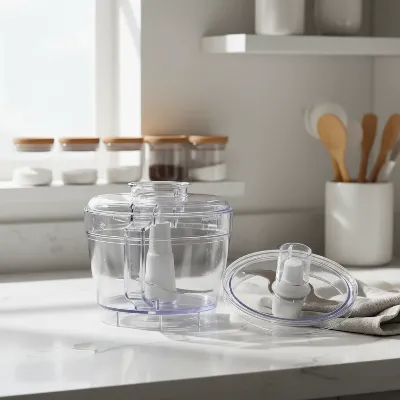 A clean food processor bowl and lid, emphasizing proper storage to prevent sticking
Conclusion
A stuck food processor lid can be an annoying obstacle in the kitchen, but it doesn’t have to spell the end for your appliance. By understanding the common causes and patiently applying these safe, step-by-step troubleshooting techniques, you can often free your lid without resorting to damaging force. Remember the importance of safety first, and make preventative measures like thorough cleaning and proper storage a regular part of your routine. With a little care, your food processor will continue to be a reliable partner in all your culinary adventures. What clever kitchen hacks have you discovered for keeping your appliances in top shape?
Frequently Asked Questions
What causes a food processor lid to get stuck?
Food processor lids commonly get stuck due to dried food debris accumulating in the locking mechanisms or under the seal, creating a sticky bond. A vacuum seal can also form if hot contents are sealed and then cool, or if the lid is put on incorrectly, causing it to jam.
Is it safe to force a stuck food processor lid?
No, it is generally not safe to force a stuck food processor lid. Applying excessive force can crack or break plastic components, damage the locking mechanisms, or even harm the motor base. Always unplug the appliance and try gentle, methodical approaches first.
Can hot water help loosen a stuck lid?
Yes, applying warmth can often help. Soaking the bowl (without submerging the motor base) in hot water or wrapping a warm, damp towel around the lid’s rim can help expand the plastic slightly, soften dried food residue, and break a stubborn vacuum seal.
What if my lid is stuck due to dried food?
If dried food is the culprit, try applying warmth as described above, or use a few drops of food-grade oil around the seam where the lid meets the bowl. Allow the oil to penetrate for several minutes to lubricate the dried particles, making it easier to twist the lid free.
How can I prevent my food processor lid from getting stuck in the future?
To prevent future jams, always clean the lid and bowl thoroughly after each use, paying attention to seals and locking tabs. Avoid overfilling, ensure the lid is aligned correctly before locking, and store it loosely or inverted on the bowl to prevent vacuum seals.
Should I use oil to unstick my food processor lid?
Yes, food-grade oil (like vegetable or olive oil) can be safely used to lubricate a stuck food processor lid. Apply a few drops around the seam where the lid meets the bowl and allow it time to penetrate. This helps reduce friction and can loosen dried residue, aiding in removal.
