Has your once-pristine food processor bowl started looking a little hazy, dulling its shine and making your kitchen feel less tidy? You’re not alone. This common culinary conundrum can be frustrating, but before you consider replacing your trusty appliance, know that a fast, effective DIY solution is often within reach. This guide, drawing on years of experience with all types of food processors, will reveal the secrets to banishing that unsightly cloudiness and bringing back the sparkle to your bowl.
Understanding Why Your Food Processor Bowl Gets Cloudy
|
Our Picks for the Best Food Processor in 2026
As an Amazon Associate I earn from qualifying purchases.
|
||
| Num | Product | Action |
|---|---|---|
| 1 | Ninja Kitchen System | 8-Cup Food Processor Bowl & 72 oz. Blender All-in-One | With (2) 16 oz. To-Go Cups | For Smoothies, Ice Crushing, Dough & More | 1500 Watt | Black | BL770 |

|
| 2 | Hamilton Beach Food Processor & Vegetable Chopper for Slicing, Shredding, Mincing, and Puree, 10 Cups + Easy Clean Bowl Scraper, Black and Stainless Steel (70730) |
|
| 3 | Ninja Food Processor, Professional XL, 1200 Peak-Watts, 4-in-1, Chopping, Slicing/Shredding, Purees, Dough, 12-Cup Processor Bowl, 2 Blades & 2 Discs, Feed Chute/Pusher, Black, NF701 |
|
| 4 | Ninja BN600 Professional Food Processor (Renewed) |
|
| 5 | Cuisinart 5-cup Chop & Shred Food Processor, Silver, FP-5 |
|
| 6 | Ninja Food Processor, Professional Plus, 1000 Peak Watts, 4 Functions for Chopping, Slicing, Purees & Dough with 9-Cup Processor Bowl, 3 Blades, Food Chute & Pusher, Silver, BN601 |
|
| 7 | Hamilton Beach Food Processor & Vegetable Chopper for Slicing, Shredding, Mincing, and Puree, 8 Cup, Black |
|
| 8 | BLACK+DECKER 3-in-1 Easy Assembly 8-Cup Food Processor, Stainless Steel S-Blade, Easy-Clean, Touchpad Controls Black |
|
| 9 | BLACK+DECKER 8-Cup Food Processor, Easy Assembly, Stainless Steel S-Blade, Shred, Slice, Chop, Puree, 450W Motor |
|
| 10 | Hamilton Beach Stack & Snap Food Processor and Vegetable Chopper, BPA Free, Stainless Steel Blades, 12 Cup Bowl, 2-Speed 450 Watt Motor, Black (70725A) |
|
Before tackling the haze, it’s helpful to understand what causes it. The cloudiness in plastic food processor bowls is primarily due to several factors, often working in combination.
Hard Water and Mineral Buildup: Tap water, especially in areas with hard water, contains minerals like calcium and magnesium. When water evaporates, these minerals are left behind, accumulating over time to form a stubborn, cloudy film on the plastic surface.
Soap Scum and Detergent Residue: Ironically, the very act of cleaning can contribute to the problem. If dish soap or dishwasher detergent isn’t thoroughly rinsed, its residue can bond with hard water minerals, creating a scummy layer that adheres to the plastic. Harsh detergents can also etch the plastic surface over time.
Heat Exposure: High temperatures are a major culprit. Frequent exposure to the intense heat of a dishwasher cycle, or even placing hot food directly into the bowl, can cause the plastic’s molecular structure to change. This alteration makes the plastic warp slightly or develop a permanent hazy appearance, scattering light instead of allowing it to pass through clearly.
Micro-scratches and Abrasion: Even seemingly gentle scrubbing with abrasive sponges, brushes, or even metal utensils can create tiny, microscopic scratches on the plastic surface. These imperfections trap food particles, grease, and mineral deposits, making the bowl appear dull and cloudy.
Food Residue and Chemical Reactions: Certain foods, particularly those high in oil, fat, or acidity (like tomato sauce or citrus), can react with the plastic over time. Oils can seep into the plastic’s pores, and acids can cause subtle etching, both leading to discoloration and cloudiness.
Essential DIY Cleaning Tools and Ingredients
To restore your food processor bowl’s clarity, you’ll likely need items you already have around the house:
- White distilled vinegar
- Baking soda
- Fresh lemons
- Soft sponges or microfiber cloths
- A small, soft-bristled brush (an old toothbrush works well)
- Warm water
- Optional: Powdered dishwasher detergent, Hydrogen Peroxide
Step-by-Step DIY Methods to Restore Clarity
Here are several highly effective DIY methods to tackle a cloudy food processor bowl, ranging from simple soaks to more intensive scrubs.
1. The Vinegar Soak Method
White vinegar is a powerhouse for dissolving mineral deposits and soap scum thanks to its acetic acid content. It’s often the first and most effective step.
- How it works: The acetic acid in vinegar works by dissolving mineral deposits and breaking down soap scum, making it an incredibly effective natural cleaner for cloudy plastic.
- Instructions: Fill your food processor bowl about halfway with warm water, then add one cup of white distilled vinegar. You can also submerge the entire bowl in a sink filled with equal parts warm water and vinegar. Let the bowl soak for at least one hour, or for severely cloudy bowls, leave it overnight. After soaking, empty the bowl and scrub gently with a soft sponge or cloth, then rinse thoroughly with warm water.
- When to use: Ideal for cloudiness caused by hard water stains and general detergent film.
2. Baking Soda Paste for Gentle Scrubbing
Baking soda acts as a mild abrasive that can gently buff away surface residue without scratching the plastic.
- How it works: The fine颗粒 of baking soda provide a gentle scrubbing action, helping to lift and remove surface film and light haze.
- Instructions: Mix about two tablespoons of baking soda with just enough warm water to form a thick paste. Apply this paste directly to the cloudy areas inside and outside the bowl using a soft sponge or a small brush. Gently scrub the entire surface in small, circular motions, focusing on the haziest spots. Rinse thoroughly to remove all baking soda residue.
- When to use: Effective for minor cloudiness, light films, and as a follow-up to a vinegar soak.
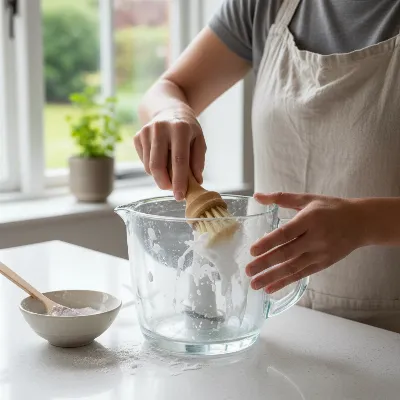 Woman gently scrubbing a cloudy food processor bowl with baking soda paste and a soft brush.
3. Lemon and Baking Soda Blend
Combining the acidity of lemon with the mild abrasiveness of baking soda offers a dual-action cleaning approach that also leaves a fresh scent.
- How it works: Lemon juice’s citric acid helps break down residue, similar to vinegar, while baking soda provides scrubbing power. It’s also excellent for tackling lingering odors.
- Instructions: Squeeze the juice of one fresh lemon into your food processor bowl. Add two to three tablespoons of baking soda. The mixture will fizz. Top it off with warm water and let it sit for about 30 minutes. For an easier method, blend the mixture on high for a few seconds (if your bowl is safe for this), then scrub with a non-abrasive sponge. Rinse thoroughly.
- When to use: Good for mild cloudiness, light stains, and to eliminate food odors.
4. Deep Cleaning with Powdered Dishwasher Detergent
For particularly stubborn, greasy, or cloudy films, powdered dishwasher detergent can be surprisingly effective due to its stronger cleaning agents.
- How it works: Dishwasher detergents contain powerful enzymes and cleaning agents designed to cut through grease and hard-to-remove residues.
- Instructions: Add two tablespoons of powdered dishwasher detergent to your food processor bowl. Fill the bowl almost to the top with hot water (not boiling, just very hot). Let it stand for at least two hours, or even overnight. After soaking, dump out most of the solution and use a soft sponge to scrub the interior with the remaining soapy water. Rinse the bowl thoroughly multiple times to ensure no detergent residue remains, as this can lead to further cloudiness or affect food safety.
- When to use: For heavy buildup and tenacious cloudiness that other methods haven’t fully resolved.
5. Hydrogen Peroxide Soak for Stubborn Film
Hydrogen peroxide can be a powerful ally against soap scum and hard water veneer, as well as some food stains.
- How it works: Hydrogen peroxide helps to oxidize and break down organic residues and mineral buildup, lifting away stubborn films.
- Instructions: Fill your food processor bowl with a solution of equal parts hydrogen peroxide and water. Let the bowl soak for at least 6-8 hours, or up to 24 hours for very stubborn films. After soaking, empty the solution and follow up with a baking soda paste scrub for added effectiveness. Rinse exceptionally well with warm water.
- When to use: Excellent for persistent soap scum, hard water veneer, and even some light food stains.
Prevention is Key: Keeping Your Bowl Crystal Clear
While these cleaning methods are effective, preventing cloudiness in the first place is always the best approach.
- Handwash Whenever Possible: High heat from dishwashers is a primary culprit for plastic cloudiness. Handwashing with warm, soapy water and a soft cloth is gentler on the plastic and prevents heat-induced damage.
- Use Soft Cleaning Tools: Always opt for soft sponges, microfiber cloths, or soft-bristled brushes. Avoid abrasive scouring pads, steel wool, or metal utensils that can scratch the plastic surface and create tiny crevices for residue to hide.
- Rinse Immediately After Use: Don’t let food residue dry and harden in your bowl. A quick rinse with warm water immediately after use can prevent much of the buildup.
- Mind the Dishwasher: If you must use a dishwasher, always place the food processor bowl on the top rack, which typically exposes it to less intense heat. Use a mild, non-abrasive detergent and, if possible, select a lower heat setting for drying.
- Avoid Extreme Heat: Never place your plastic food processor bowl in the microwave unless explicitly labeled as microwave-safe, and even then, use caution. Allow hot foods to cool before placing them in the bowl for storage.
- Proper Storage: Ensure your bowl is completely dry before storing it to prevent moisture buildup and potential odors. Avoid stacking containers too tightly without protection, as this can cause scratches.
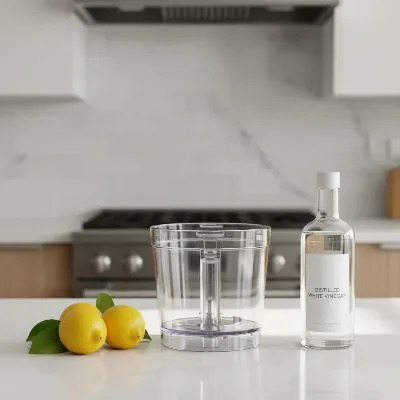 A sparkling clean food processor bowl reflecting light, surrounded by fresh lemons and a bottle of white vinegar on a modern kitchen counter.
When to Consider Replacement
Unfortunately, not all cloudiness can be reversed. If your food processor bowl’s cloudiness is due to permanent polymer crystallization from excessive heat damage, or if there are deep scratches that compromise its hygiene or functionality, it might be time to consider a replacement. In such cases, the plastic’s structure has changed irrevocably, and no amount of scrubbing or soaking will restore its original clarity.
Conclusion
A cloudy food processor bowl doesn’t have to be a permanent fixture in your kitchen. By understanding the causes of this common issue and applying these simple, fast DIY cleaning methods, you can often restore your bowl’s transparency and extend its lifespan. Remember that prevention is your best tool, with mindful cleaning habits playing a crucial role in maintaining that pristine clarity. So, which of these methods will you try first to bring back the shine to your kitchen?
Frequently Asked Questions
Why does my food processor bowl get cloudy in the dishwasher?
Dishwashers contribute to cloudiness primarily through high heat and harsh detergents. The intense heat can cause plastic to soften and undergo molecular changes, leading to a hazy appearance, while strong detergents can etch the surface or leave mineral and soap scum deposits if not thoroughly rinsed.
Can I use bleach to clean my food processor bowl?
While bleach can remove some stains, it’s generally not recommended for routine cleaning of plastic food processor bowls. Bleach can be harsh on plastic, potentially causing further degradation or discoloration, and requires extremely thorough rinsing to ensure food safety. Natural alternatives like vinegar or lemon juice are safer and often just as effective for cloudiness.
How often should I deeply clean my food processor bowl?
The frequency of deep cleaning depends on your usage and water hardness. If you use your food processor frequently, especially with oily or acidic foods, or if you have hard water, a deep clean every few weeks or once a month can prevent buildup. Otherwise, addressing cloudiness as soon as it appears is a good practice.
Are there any plastics that are less prone to clouding?
Higher-quality plastics, such as those labeled BPA-free or made from certain types of polycarbonate, are often more resistant to clouding from heat and chemical reactions. However, even these can eventually show signs of wear and cloudiness if not cared for properly, particularly with abrasive cleaning or very high temperatures.
Does olive oil or toothpaste work for cleaning cloudy plastic?
While some anecdotal evidence suggests using olive oil or toothpaste for minor scuffs, these methods are generally not effective for the type of mineral buildup or heat-induced cloudiness seen in food processor bowls. Olive oil can leave a greasy residue, and toothpaste, while mildly abrasive, isn’t designed to dissolve the specific films causing the haze.
