A food processor is a workhorse in any kitchen, simplifying everything from chopping vegetables to kneading dough. But few things are as frustrating as discovering a pool of liquid escaping from its base or lid, turning your efficient gadget into a messy headache. This common problem, while annoying, often has simple causes and straightforward solutions. Understanding why your food processor leaks is the first step to a quick fix and preventing future spills.
Understanding Your Food Processor: A Quick Overview
|
Our Picks for the Best Food Processor in 2026
As an Amazon Associate I earn from qualifying purchases.
|
||
| Num | Product | Action |
|---|---|---|
| 1 | Ninja Food Processor, Professional XL, 1200 Peak-Watts, 4-in-1, Chopping, Slicing/Shredding, Purees, Dough, 12-Cup Processor Bowl, 2 Blades & 2 Discs, Feed Chute/Pusher, Black, NF701 |

|
| 2 | BLACK+DECKER 8-Cup Food Processor, Easy Assembly, Stainless Steel S-Blade, Shred, Slice, Chop, Puree, 450W Motor |
|
| 3 | Ninja Kitchen System | 8-Cup Food Processor Bowl & 72 oz. Blender All-in-One | With (2) 16 oz. To-Go Cups | For Smoothies, Ice Crushing, Dough & More | 1500 Watt | Black | BL770 |
|
| 4 | BLACK+DECKER 3-in-1 Easy Assembly 8-Cup Food Processor, Stainless Steel S-Blade, Easy-Clean, Touchpad Controls Black |
|
| 5 | Hamilton Beach Food Processor & Vegetable Chopper for Slicing, Shredding, Mincing, and Puree, 10 Cups + Easy Clean Bowl Scraper, Black and Stainless Steel (70730) |
|
| 6 | Hamilton Beach Stack & Snap Food Processor and Vegetable Chopper, BPA Free, Stainless Steel Blades, 12 Cup Bowl, 2-Speed 450 Watt Motor, Black (70725A) |
|
| 7 | Cuisinart 5-cup Chop & Shred Food Processor, Silver, FP-5 |
|
| 8 | Ninja BN600 Professional Food Processor (Renewed) |
|
| 9 | Ninja Food Processor, Professional Plus, 1000 Peak Watts, 4 Functions for Chopping, Slicing, Purees & Dough with 9-Cup Processor Bowl, 3 Blades, Food Chute & Pusher, Silver, BN601 |
|
| 10 | Hamilton Beach Food Processor & Vegetable Chopper for Slicing, Shredding, Mincing, and Puree, 8 Cup, Black |
|
Before diving into leak solutions, let’s quickly review the core components of a typical food processor that are relevant to preventing spills. At its heart, a food processor consists of a sturdy motor base, a work bowl, a set of blades or discs, and a lid. For the machine to operate efficiently and safely, these parts must create a secure, watertight seal. Key sealing points include the connection between the bowl and the motor base, the area where the blade shaft passes through the bottom of the bowl, and the perimeter of the lid where it meets the bowl. Any compromise in these seals can lead to unwelcome leakage.
Top Reasons Your Food Processor Is Leaking Liquid
Several factors can contribute to your food processor leaking liquid. Identifying the exact cause is crucial for applying the correct solution.
Overfilling the Work Bowl
One of the most frequent culprits behind a leaky food processor is simply overfilling the work bowl. Many users, eager to process large batches, inadvertently exceed the maximum liquid fill line indicated on the bowl itself or in the appliance’s manual. When the bowl is overfilled, especially with thin liquids like soups or sauces, the liquid can be forced under the blade assembly and out onto the motor base, creating a mess. Always checking the maximum fill line is a simple yet effective preventative measure.
Worn, Damaged, or Misaligned Seals/Gaskets
Food processors rely on rubber seals or gaskets to create tight connections between components. Over time, these seals can suffer from wear and tear. They may become brittle, cracked, or stretched, losing their ability to create an effective barrier. Common areas for seal failure include the gasket around the lid, the O-ring or seal at the base of the blade assembly where it meets the bowl, and sometimes a seal between the bowl and the motor unit. A misplaced or improperly seated seal can also mimic damage, allowing liquid to escape through small gaps.
Cracked Work Bowl or Lid
Even a hairline crack in your food processor’s work bowl or lid can lead to significant leaks. These cracks might be hard to spot initially but can become apparent when processing liquids under pressure. Dropping the bowl or lid, using abrasive cleaners, or even continuous stress from locking mechanisms can cause these structural weaknesses. If you notice any visible damage, however minor, it’s a direct pathway for liquid to escape.
Improper Assembly
A food processor’s safety mechanisms often require components to be precisely aligned and securely locked into place before operation. If the work bowl isn’t properly seated on the motor base, or if the lid isn’t twisted and locked securely onto the bowl, the internal pressure generated during processing can force liquids out through these unsecured gaps. Similarly, if the blade assembly isn’t correctly attached to its shaft or seated in the bowl, it can compromise the seal around its base.
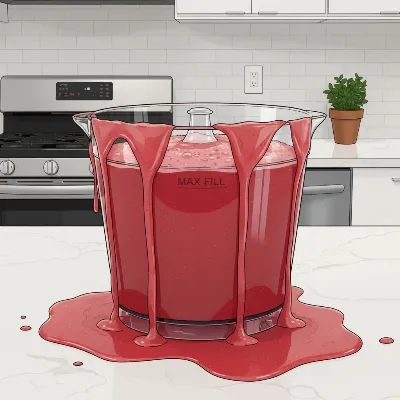 A food processor bowl being overfilled with liquid, demonstrating how exceeding the max fill line causes leaks.
Incorrect Blade Usage
While most food processors are versatile, some attachments are better suited for specific tasks. For example, some models might have an “egg whip” or a specific disc that is not designed to create a watertight seal when processing liquids. Using such attachments with high-liquid content recipes can lead to splashing and leakage, as they don’t form the necessary barrier around the central shaft or within the bowl to contain fluids effectively. Always refer to your manual to ensure you are using the correct blade or attachment for liquid processing.
Worn or Deformed Bowl
With prolonged use, especially involving hot ingredients or harsh cleaning methods, the plastic or sometimes glass work bowl of a food processor can undergo subtle deformation. This warping, even if not immediately visible as a crack, can prevent the bowl from seating perfectly with the lid or motor base, thereby compromising the intended seal. When the bowl no longer fits snugly, leaks can become a persistent issue, signaling that the bowl itself might be nearing the end of its lifespan.
Troubleshooting Your Leaky Food Processor: A Step-by-Step Guide
Dealing with a leaky food processor can be frustrating, but many issues can be resolved with careful inspection and a few simple steps. Here’s a practical guide to diagnosing and fixing the problem.
-
Stop and Unplug Immediately: Safety is paramount. As soon as you notice a leak, switch off your food processor and unplug it from the power outlet. This prevents potential electrical hazards and further damage to the appliance or your countertop.
-
Empty and Disassemble: Carefully remove any food contents from the bowl. Then, disassemble all removable parts: the lid, pusher, blade assembly, and the work bowl itself. This allows for a thorough inspection of each component.
-
Inspect the Fill Line: Check the food processor’s work bowl for any marked maximum liquid fill line. Compare this to the amount of liquid you were processing. If you routinely exceed this line, overfilling is likely the cause. Make a conscious effort to stay below this limit in the future.
-
Examine Seals and Gaskets: Pay close attention to all rubber or silicone seals. This includes the large gasket on the underside of the lid, any O-rings around the blade’s central shaft, and any seals connecting the bowl to the motor base. Look for signs of wear such as tears, cracks, brittleness, or discoloration. Also, ensure they are correctly seated and not twisted or bunched up. If a seal is damaged, it will need to be replaced. These replacement parts are often available from the manufacturer or third-party appliance parts retailers.
-
Check Bowl and Lid for Cracks: Hold the work bowl and lid up to a light source. Inspect both thoroughly for any cracks, chips, or fractures. Even tiny, almost invisible cracks can cause leaks under pressure. Run your fingers along the surfaces; sometimes, you can feel a crack before you see it. If either the bowl or lid is cracked, it must be replaced. Continuing to use a cracked component is not recommended, as it can worsen the leak and potentially compromise food safety.
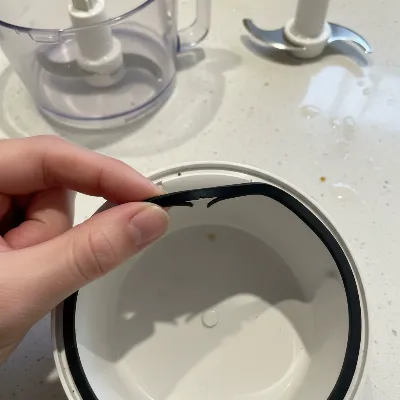 A close-up shot of a hand inspecting a rubber gasket seal on a food processor lid for damage or misalignment.
-
Verify Blade Assembly and Seating: Ensure the blade assembly is correctly placed onto the drive shaft within the bowl. It should sit firmly and securely, without any wobbling or gaps around its base. If there’s a specific locking mechanism for the blade, make sure it’s engaged. Sometimes, food debris can prevent the blade from seating properly, so a good clean helps.
-
Clean All Components Thoroughly: Food particles and residue can accumulate in crevices and around seals, preventing them from forming a tight seal. Wash all removable parts with warm, soapy water, paying extra attention to the areas around seals and where components connect. Use a small brush or toothpick to dislodge any stubborn debris. Ensure all parts are completely dry before reassembly.
-
Reassemble Carefully: Follow your food processor’s manual for proper reassembly. Ensure the bowl is securely locked onto the motor base, the blade is correctly seated, and the lid is firmly twisted and locked into position. Many models have an audible click or visual indicator when components are correctly assembled.
-
Test with Water: Before processing food again, perform a simple water test. Fill the bowl with plain water (to just below the maximum liquid line), secure the lid, and let it sit for a few minutes. If there are no leaks, briefly turn the processor on (without food) to simulate operation and check again. This allows you to confirm the fix without wasting ingredients or creating a new mess.
Preventing Future Leaks: Best Practices
Consistent care and proper usage are key to extending the life of your food processor and keeping it leak-free.
- Always Respect the Maximum Fill Line: This is arguably the most critical rule. Never fill your food processor’s bowl above the indicated maximum liquid line, especially when processing thin liquids or using high speeds that generate significant pressure.
- Regularly Inspect and Maintain Seals: Make it a habit to check your gaskets and seals for any signs of wear, damage, or misalignment before and after each use. Promptly clean them and replace them if they show any deterioration. Seals are consumable parts and will eventually need replacement.
- Handle the Bowl and Lid with Care: Avoid dropping the work bowl or lid, as this can easily lead to cracks or deformation. Be gentle when locking and unlocking the components to prevent stress fractures over time.
- Ensure Proper Assembly Every Time: Before turning on your food processor, double-check that the bowl is securely locked to the base, the blade is properly seated, and the lid is firmly in place. Don’t rush this step, as improper assembly is a common cause of leaks.
- Use the Correct Blade for the Task: Consult your user manual to ensure you are using the appropriate blade or attachment for the ingredients you are processing, particularly when working with liquids. Using a blade not designed for liquids can compromise the seal.
- Clean Thoroughly After Each Use: Food residues can build up and harden in crevices, preventing seals from seating properly. Disassemble and wash all removable parts with warm, soapy water after every use, ensuring no food particles are left behind.
- Store Properly: Store your food processor parts in a way that doesn’t put stress on the seals or risk cracking the bowl. Avoid stacking heavy items on top of the lid or bowl.
“Many users underestimate the importance of the food processor’s seals. These small rubber rings are the unsung heroes preventing kitchen disasters. Treat them with care, and they’ll serve you well.” – Sarah Chen, Appliance Repair Specialist
Conclusion
A leaking food processor is undoubtedly an unwelcome sight, but with a systematic approach, it’s often a problem you can tackle yourself. By understanding the common culprits—from simple overfilling and improper assembly to worn-out seals or hairline cracks—and diligently following troubleshooting steps, you can usually restore your appliance to its leak-free glory. Remember, prevention is always better than cure: careful handling, adherence to fill lines, and routine maintenance of seals are your best defense against future spills. Don’t let a small leak sideline your kitchen companion; empower yourself with these quick fixes and keep your culinary adventures mess-free.
What’s the one maintenance tip you swear by to keep your food processor running smoothly?
Frequently Asked Questions
Can I use my food processor if it’s leaking a little?
It is not recommended to use your food processor if it is leaking, even a little. Leaks can indicate an underlying issue like a damaged seal or a crack, which could worsen over time or pose a safety risk, such as electrical shock if liquid reaches the motor. Always address the leak before continuing use.
How often should I replace food processor seals?
The frequency for replacing food processor seals varies based on usage and care. Generally, if you use your food processor regularly, inspect the seals every few months. Replace them when they show visible signs of wear, brittleness, cracks, or if you notice consistent leaking despite proper assembly and fill levels.
Why does my food processor leak from the bottom?
Leaks from the bottom of your food processor are typically caused by a compromised seal around the blade assembly shaft where it connects to the bowl, or a crack in the bottom of the work bowl itself. Overfilling the bowl can also force liquid down past these points onto the motor base.
Are food processor bowls interchangeable?
Food processor bowls are generally not interchangeable between different brands or even different models of the same brand. Each bowl is specifically designed to fit its corresponding motor base and lid, ensuring a secure, leak-proof fit and proper operation of safety mechanisms. Always use the original or an OEM replacement bowl.
Can I fix a cracked food processor bowl?
Attempting to fix a cracked food processor bowl with adhesives is strongly discouraged. Adhesives may not be food-safe, might not withstand the pressure and temperatures of processing, and could fail, leading to further leaks or introducing harmful chemicals into your food. If your bowl is cracked, the safest and most reliable solution is to replace it.
